
Organize your thoughts an ideas on a virtual canvas offered by this lightweight application that can remember what you tend forget. #Data manager #Knowledge builder #Graphic editor #Data #Knowledge #Builder
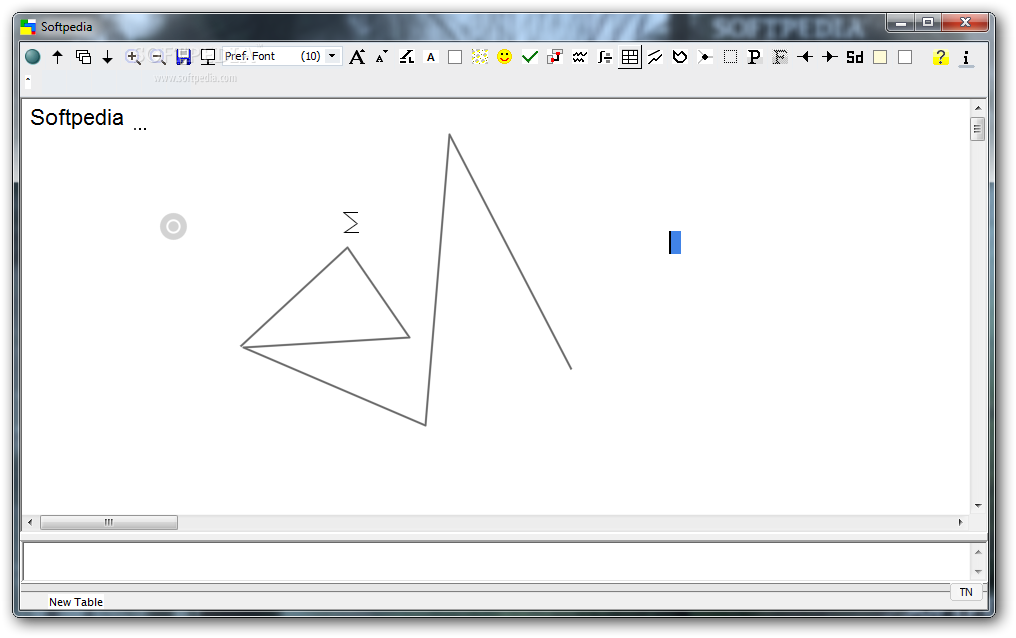
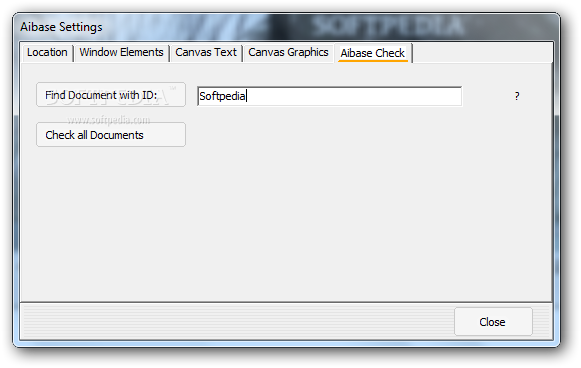
Careful management of ideas and data is the key to success in every activity. In case you don't trust your own memory for this job you can always take advantage of the computer. With the help of Aibase you can rest assured that any thoughts or plans you might have will not be forgotten.
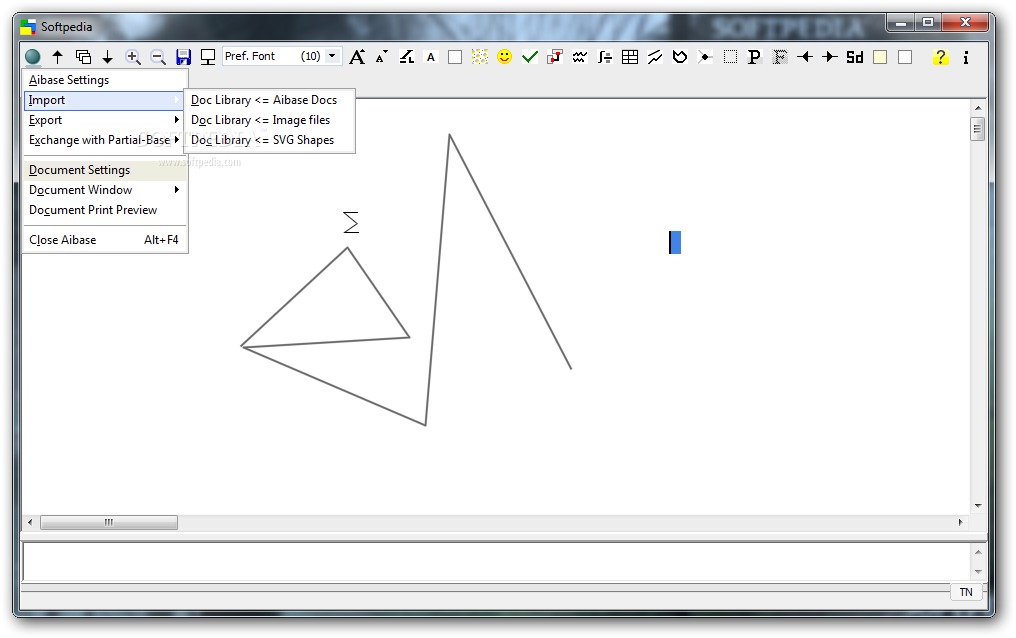
The application features a simple design, cleverly optimized to offer a large enough workspace and also include all necessary tools. You are able to express your ideas through various methods and use connectors to create a timeline so you don't lose track.
As simple as it might seem to work with, you tend to get stuck from time to time. Although you can move around pretty much everything, the simple process of creating can sometimes be time-consuming. Adding an image, for example, will require you to click too many buttons.
Probably the biggest disappointment is the difficulty in drawing. Even though you can use various tools to express your artistic stile, the application's aim is a different one. At a certain point, writing down your thoughts becomes harder than initially thought, because even the help system throws you deeper in the confusion sea rather than get you to the shore.
Taking everything into consideration, we can say that Aibase only shows its bright side after you give it some of your time. The user interface is friendly enough, but five minutes in and you will find yourself stuck with little help to be found. However, once you get to master it, difficulties will only be a thing of the past.
What's new in Aibase 3.7.2.0:
- Added: Bar/Lineplot property: Range symbols (errorbars)
- Added: Plot-types: polarfunctions: r(theta), (r(t),theta(t))
Aibase 3.7.2.0
add to watchlist add to download basket send us an update REPORT- runs on:
-
Windows 10
Windows 8
Windows 7
Windows Vista
Windows XP - file size:
- 3.6 MB


- main category:
- Office tools
- developer:
- visit homepage
Zoom Client
ShareX
IrfanView
4k Video Downloader

Microsoft Teams
calibre
7-Zip
Bitdefender Antivirus Free

Windows Sandbox Launcher
paint.net
- Bitdefender Antivirus Free
- Windows Sandbox Launcher
- paint.net
- Zoom Client
- ShareX
- IrfanView
- 4k Video Downloader
- Microsoft Teams
- calibre
- 7-Zip