
A comprehensive Prolog environment that comes with advanced debugging features, code tracing and a set of specialized instructions that you can use. #Prolog environment #Prolog compiler #Programming environment #Prolog #Compiler #Environment

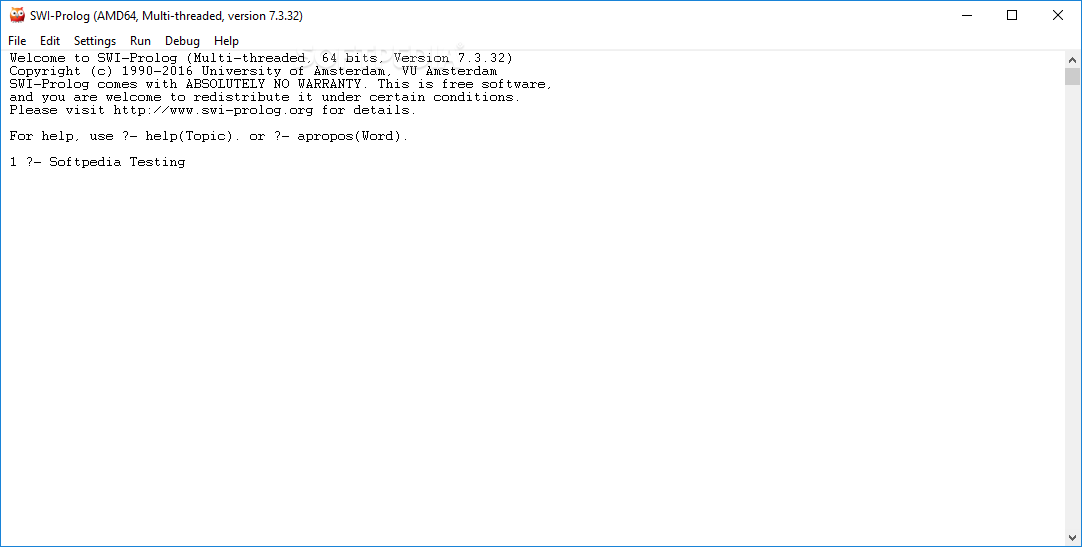
The abundance of programming languages and their diverse characteristics means that following a probabilistic logic, there might always be a right one for a certain task. The specificity of each makes working with different languages a quite demanding process in terms of the entailed software requirements. Addressing a language that is hailing from the basics of logic and being associated with AI and computational linguistics, SWI-Prolog offers a compact yet capable development environment, which is both streamlined, as it is highly functional.
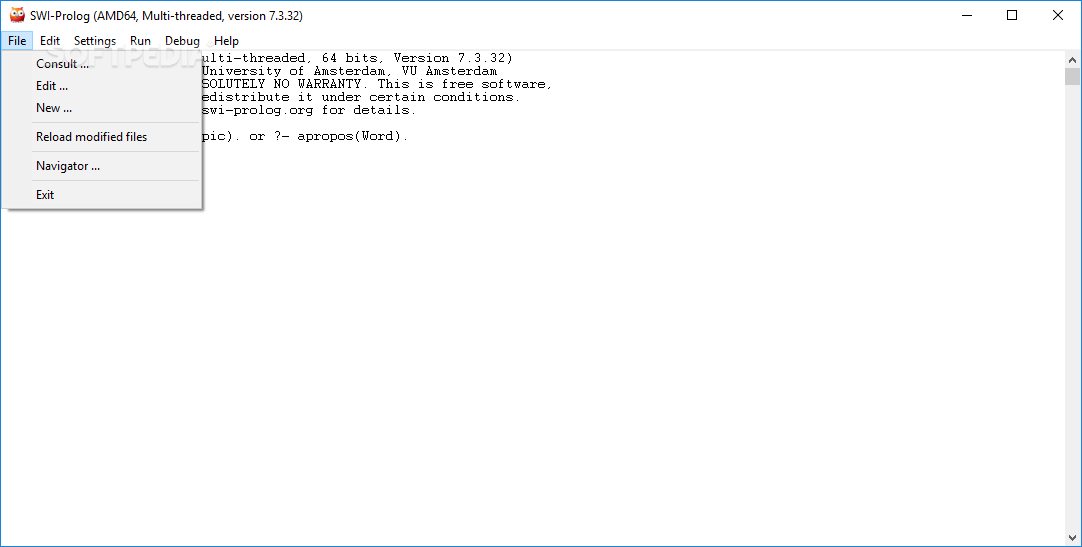
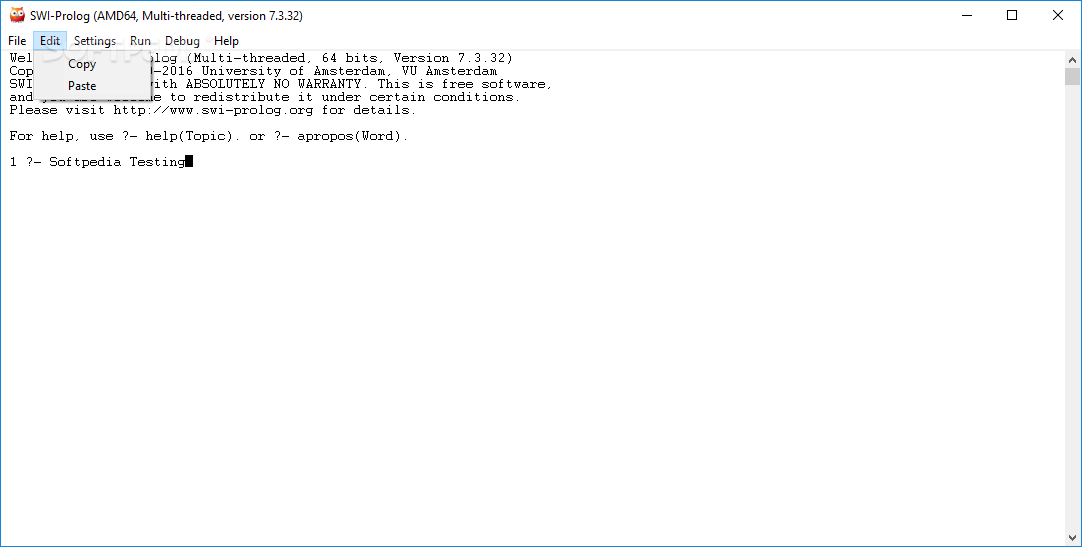
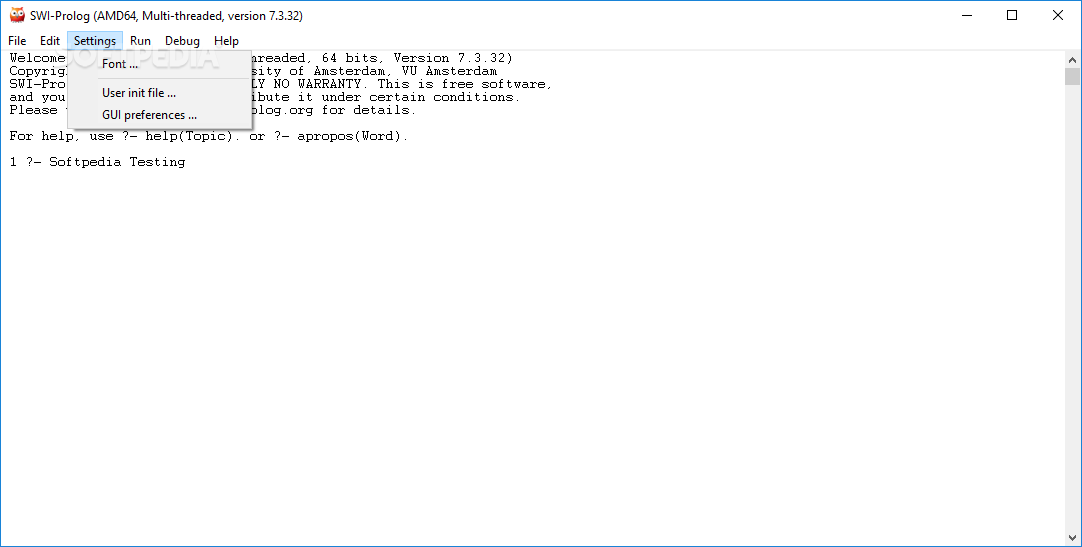
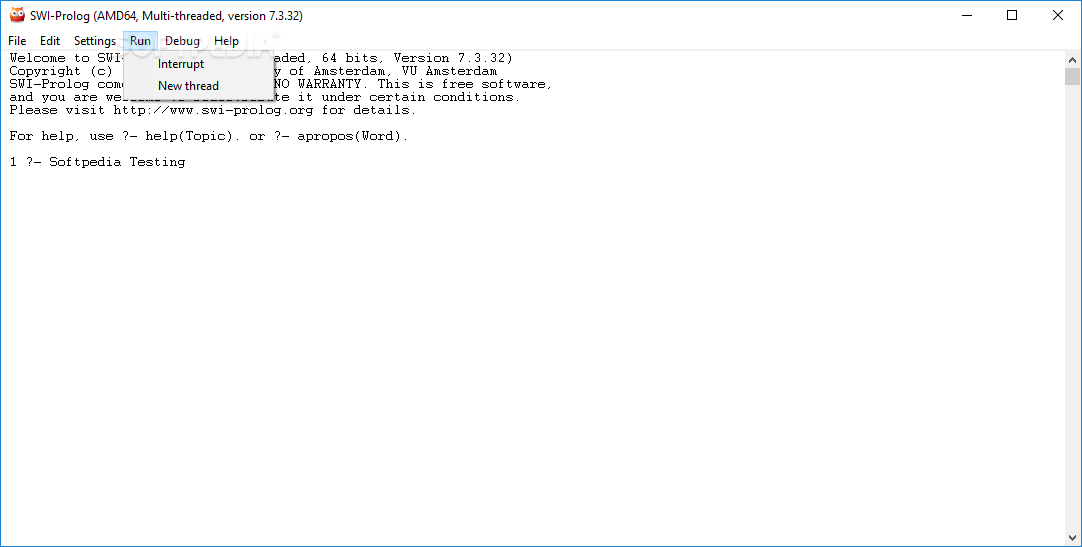
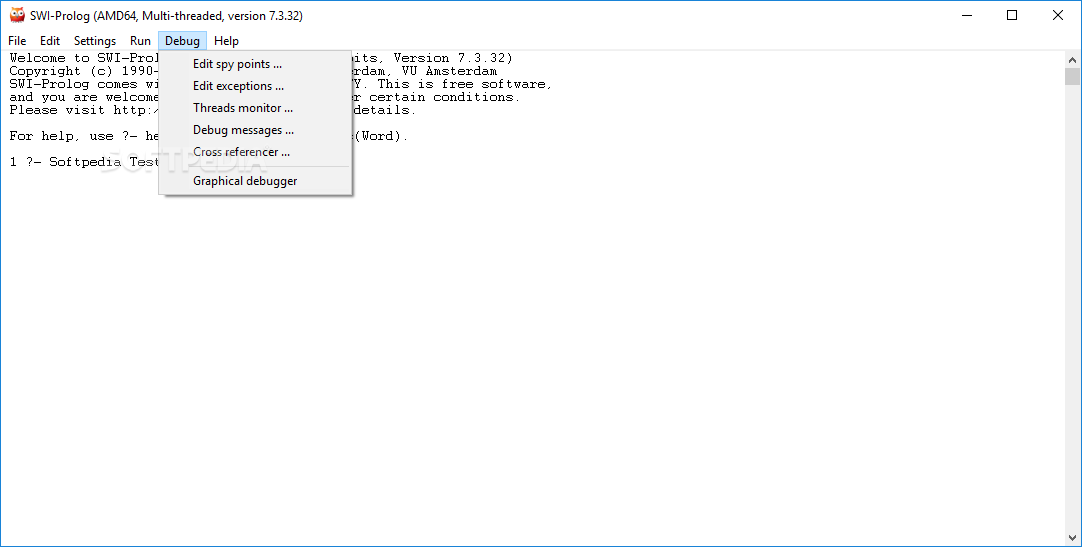
The application features a quite minimalist interface, which aside from its menus, basically has no other additional on-screen commands or buttons. The added text strings do not feature syntax highlighting.
Users have access to a variety of processes that can be initialized using the included compiler, therefore enabling them to perform a multitude of tasks without exerting too much of a load on their system’s resources, thanks to the fast compiling.
Aside from the aforementioned compiler module, the application also comes packed with a multitude of other useful tools, which address a wide range of commonly used processes and tasks.
One will be able to work with C or C++, index both static and dynamic code on multiple arguments, perform cross-referencing on Prolog data, and even output instruction statistics through the included execution profiler.
SWI-Prolog addresses those who require a specialized editor for editing and managing their Prolog code database, and it offers a comprehensive collection of tools whose scope goes far beyond that of just a plain IDE.
What's new in SWI-Prolog 9.2.3-1:
- TEST: Disable max_integer_size test for emscripten Doesn't handle longjmp() correctly in release mode. Works in debug mode, but that is not useful
- FIXED: write clauses holding > 0xffff Unicode chars in strings to QLF on Windows
- FIXED: forAtomsInClause() handling of B_*_?C instructions These called PL_unregister_atom() on the atom, rather than the argument function
- FIXED: Temp buffer handling when stack is close to top of address range
SWI-Prolog 9.2.3-1 / 9.3.3-2 Development
add to watchlist add to download basket send us an update REPORT- PRICE: Free
- runs on:
-
Windows 11
Windows 10 32/64 bit
Windows 8 32/64 bit
Windows 7 32/64 bit
Windows Vista 32/64 bit
Windows XP 32/64 bit - file size:
- 13 MB
- filename:
- swipl-9.2.3-1.x86.exe
- main category:
- Programming
- developer:
- visit homepage
paint.net
Windows Sandbox Launcher
4k Video Downloader
calibre
ShareX
7-Zip
Microsoft Teams
Zoom Client
Bitdefender Antivirus Free
IrfanView
- Zoom Client
- Bitdefender Antivirus Free
- IrfanView
- paint.net
- Windows Sandbox Launcher
- 4k Video Downloader
- calibre
- ShareX
- 7-Zip
- Microsoft Teams