
A handy and useful new task-based command line shell that helps you easily control your servers, write cmdlets in native code and manage all the remote connections. #Command-line Shell #Automate Task #Automation Script #Command-line #Terminal #Framework
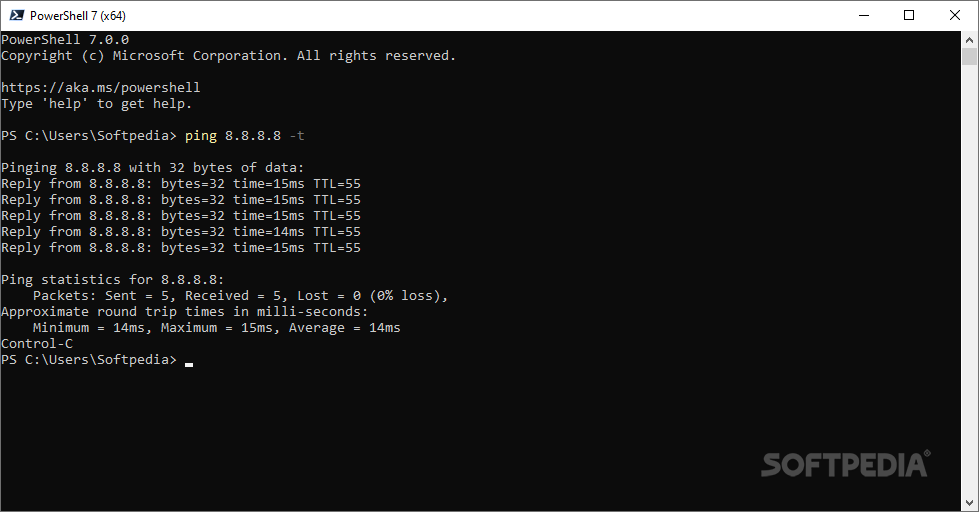
Power users and system administrators are surely familiar with the command-line shell accompanied by the scripting language known as Windows PowerShell. Part of the operating system developed by the Redmond-based company, this component acts as an automation framework that can ease system management and many other tasks.
The software has more than 130 commandlets (cmdlets), dedicated commands designed to utilize specific functions, which are able to carry out numerous type of jobs, from service or process administration to registry or object manipulation tasks.
Local or remote management is possible since Windows PowerShell provides access to Windows Management Instrumentation (WMI) and Component Object Model (COM) as well. Also, the Windows PowerShell runtime can be integrated by developers in the applications they create, thanks to the hosting API included in the package.
Creating, editing and running automation scripts can be easily done inside Windows PowerShell, especially since it offers a clean interface, that is equipped for all these tasks. Debugging is also possible and it includes breakpoint management.
All the cmdlets share the same syntax and this means that they can share information, naming conventions and more. Using Windows PowerShell you can directly handle objects of various types, or, if it is the case, send them to other databases or utilities that are meant to work with them.
Creating automation scripts and running command-line utilities for specific tasks is the main strong point of Windows PowerShell. Besides the comprehensive commandlets library, it is accompanied by the needed documentation that can help anyone understand how some functions work.
To conclude, without being too demanding insofar as the system resources are concerned, PowerShell is aimed at experienced users and will be quite easy to use for those with solid knowledge in this area of expertise.
What's new in PowerShell 7.4.2:
- General Cmdlet Updates and Fixes:
- Revert "Adjust PUT method behavior to POST one for default content type in WebCmdlets" (#21049)
- Fix regression with Get-Content when -Tail 0 and -Wait are both used (#20734) (Thanks @CarloToso!)
PowerShell 7.4.2 / 7.5.0 Preview 2
add to watchlist add to download basket send us an update REPORT- PRICE: Free
- runs on:
-
Windows 11
Windows 10 32/64 bit - file size:
- 95.9 MB
- filename:
- PowerShell-7.4.2-win-x86.msi
- main category:
- Programming
- developer:
- visit homepage
4k Video Downloader

Microsoft Teams
Windows Sandbox Launcher
ShareX
IrfanView
paint.net
7-Zip
Zoom Client
calibre
Bitdefender Antivirus Free

- Zoom Client
- calibre
- Bitdefender Antivirus Free
- 4k Video Downloader
- Microsoft Teams
- Windows Sandbox Launcher
- ShareX
- IrfanView
- paint.net
- 7-Zip