
Lightweight and simple-to-use utility which enables you to view the details of all application crashes that occurred on your system. #Application crash #Crash event report #Crash viewer #Crash #Report #Error

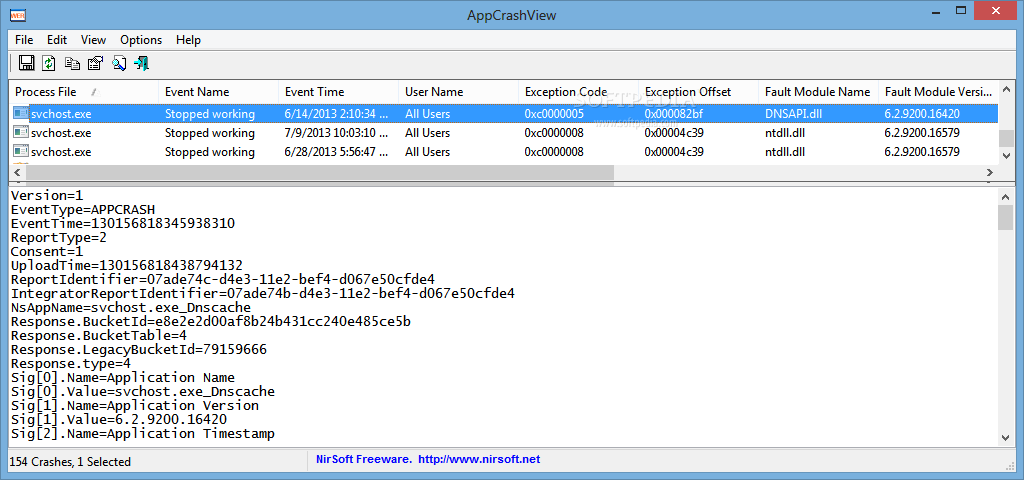
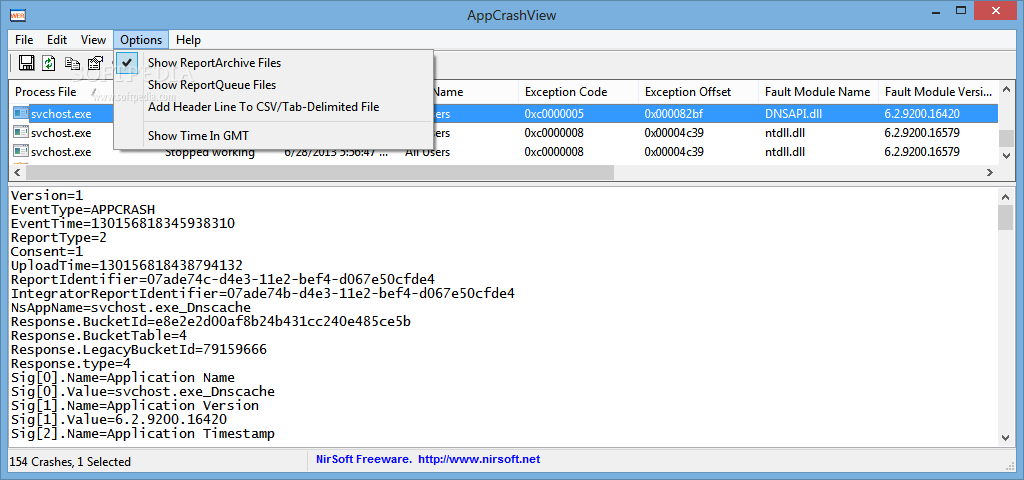
AppCrashView is a software application which helps users view information pertaining to all crashes transpired on your system. This is possible by extracting information from all WER files created by a component of your operating system, Windows Error Reporting.
This tool is portable, does not require installation or additional DLLs. You can copy the program files to any location on the hard drive, and run it by double-clicking the executable. If you place these files on a USB flash disk, you can use AppCrashView on any computer you have access to.
Aside from that, you should know the Windows registry is going to remain unchanged and there will be no leftovers upon the app’s removal.
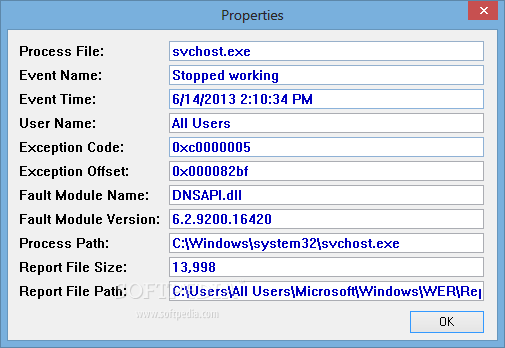
The interface is accessible to both experienced users and beginners, while the main window contains two panes. One shows the contents of a selected crash file, and the other displays a list of all crashes found in the system, along with information such as process file, event name and time, exception code, fault module name, report file size and path.
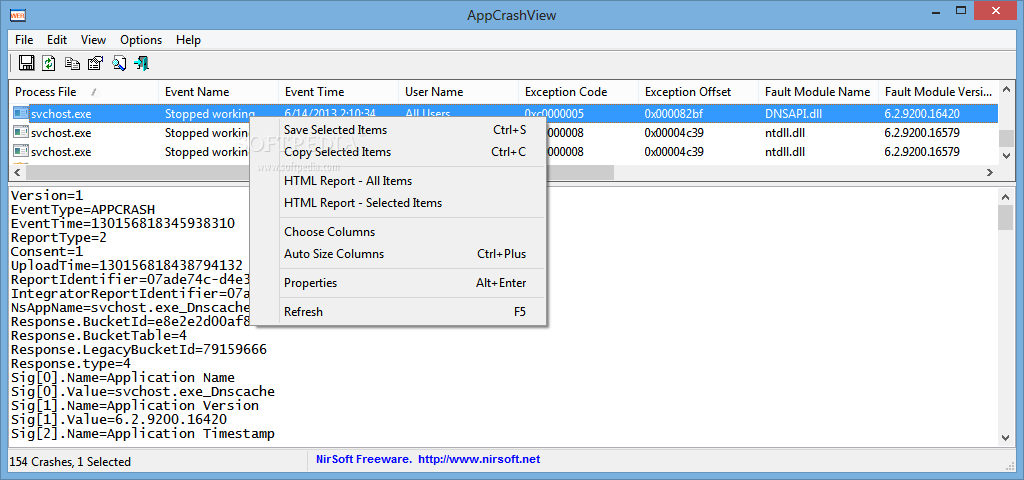
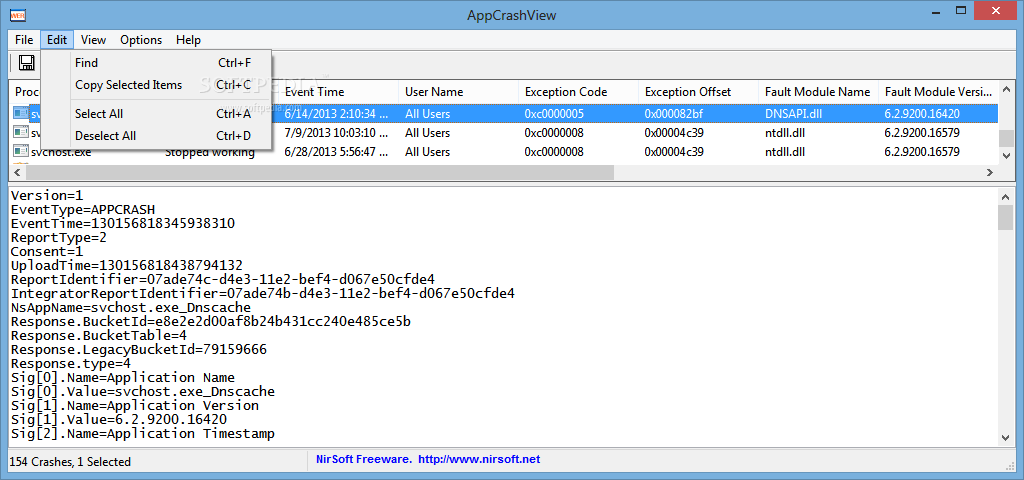
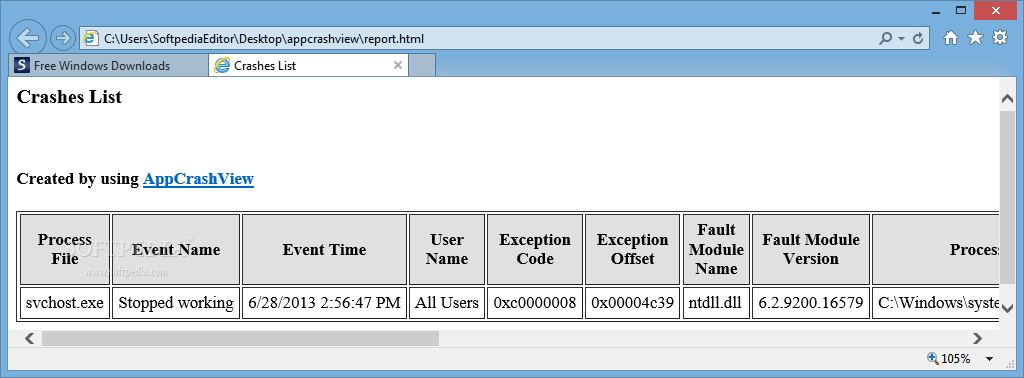
It is possible to select multiple crashes and copy them to the Clipboard or save them to the hard disk in TXT, CSV, HTML and XML formats. You can also use a search function, and filter results by matching case or only whole words.
There are not Help contents provided, yet this cannot be seen as a drawback, as they are not actually necessary, seeing how easy it is to use. CPU and memory usage keep a low level, and therefore this utility will not affect the way your computer runs.
Taking all of this into consideration, it becomes apparent that AppCrashView is an efficient piece of software which can provide you with useful information regarding particular crashes.
What's new in AppCrashView 1.35:
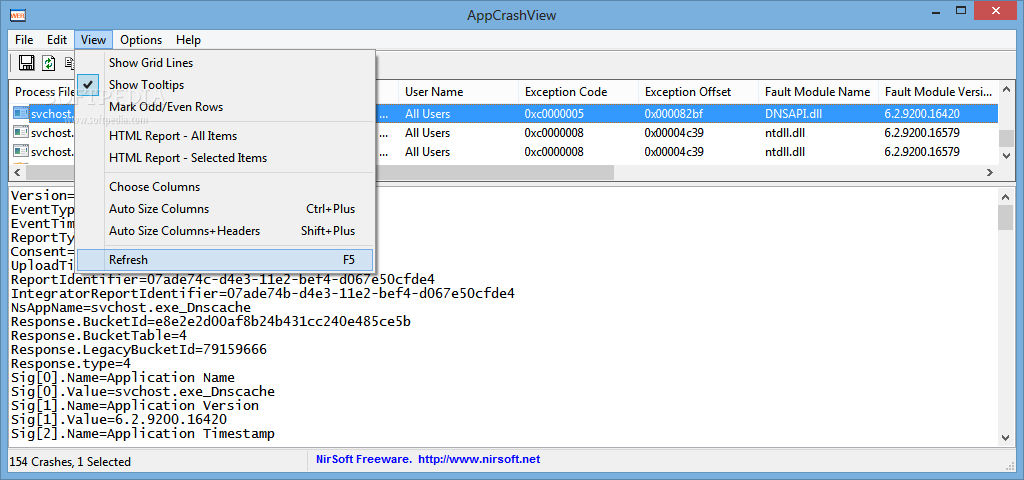
- Added 'Quick Filter' feature (View -> Use Quick Filter or Ctrl+Q). When it's turned on, you can type a string in the text-box added under the toolbar and AppCrashView will instantly filter the application crashes list, showing only lines that contain the string you typed.
AppCrashView 1.35
add to watchlist add to download basket send us an update REPORT- runs on:
-
Windows 10 32/64 bit
Windows 8 32/64 bit
Windows 7 32/64 bit
Windows Vista 32/64 bit - file size:
- 53 KB
- filename:
- appcrashview.zip
- main category:
- System
- developer:
- visit homepage
Zoom Client
paint.net
Windows Sandbox Launcher
4k Video Downloader

IrfanView
Bitdefender Antivirus Free

7-Zip
Microsoft Teams
ShareX
calibre
- Microsoft Teams
- ShareX
- calibre
- Zoom Client
- paint.net
- Windows Sandbox Launcher
- 4k Video Downloader
- IrfanView
- Bitdefender Antivirus Free
- 7-Zip