
BitTorrent client which comes bundled a download scheduler, peer-to-peer communication capabilities, a virus scanner and a pop-up bar for monitoring download and upload speeds. #BitTorrent client #File sharing #Peer to peer #BitTorrent #Client #Downloader

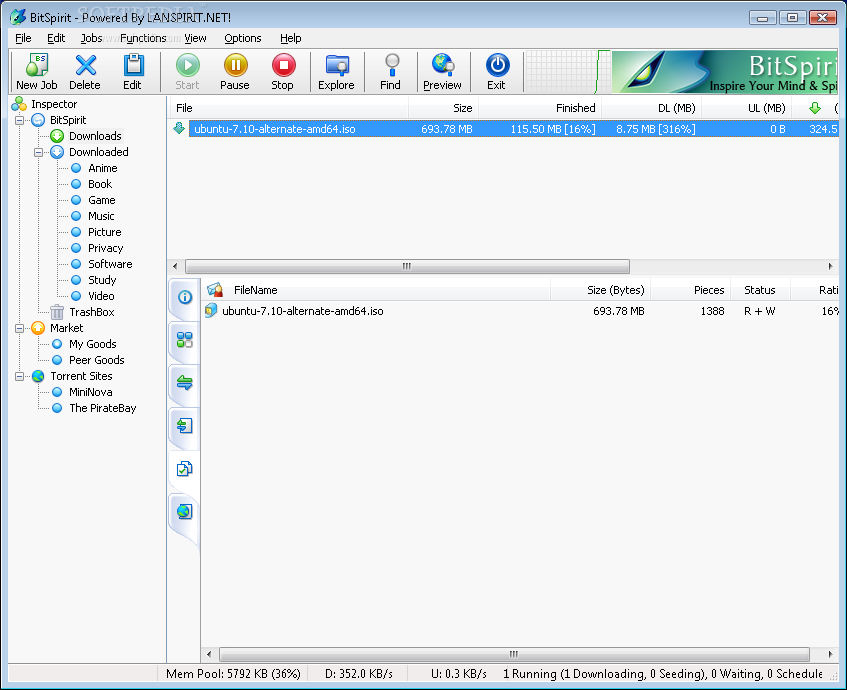
BitSpirit is a BitTorrent client developed to help you take full advantage of this popular file sharing protocol, thus providing great download speed and a user friendly interface. Just like other applications in this category, BitSpirit is specifically designed to help users download the files without interfering with other functions.
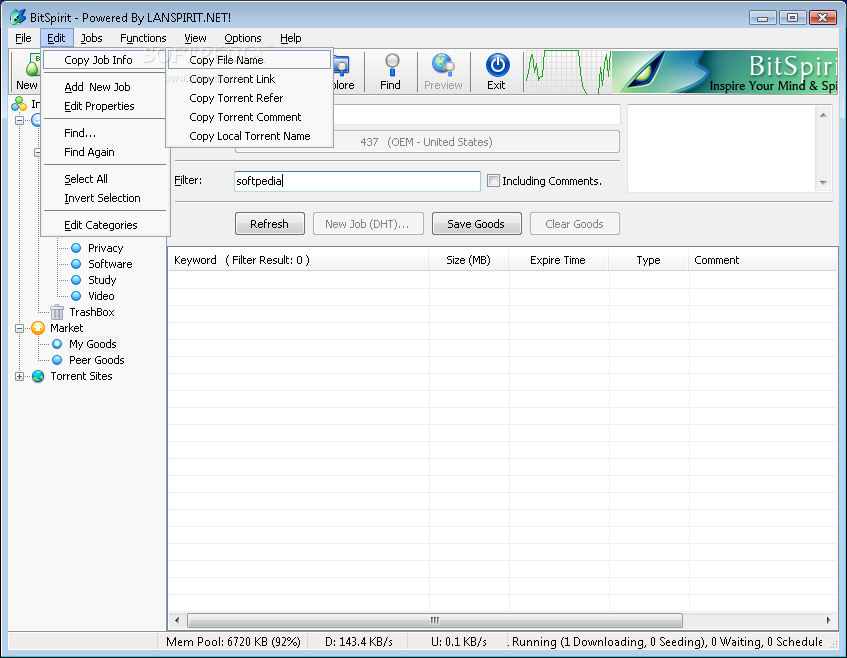
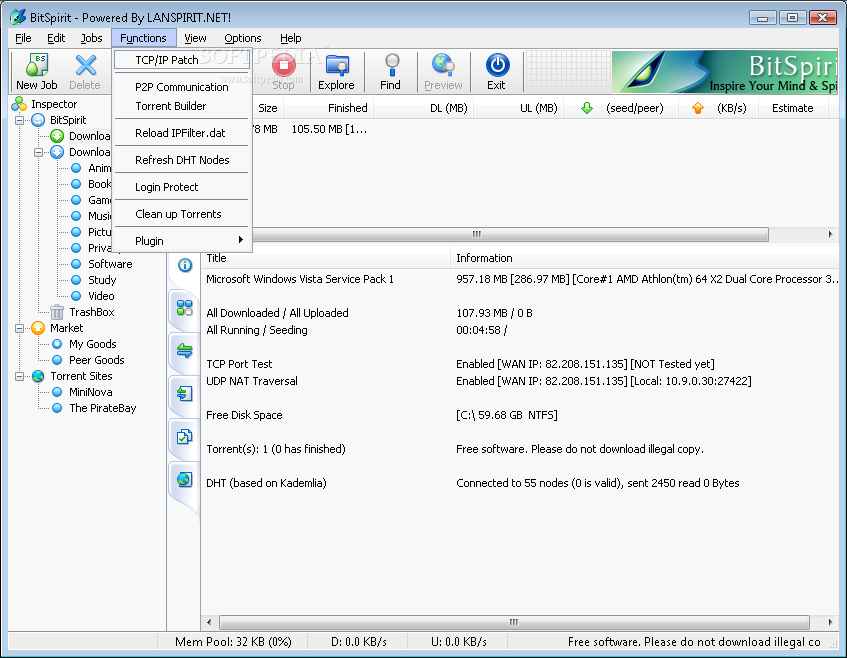
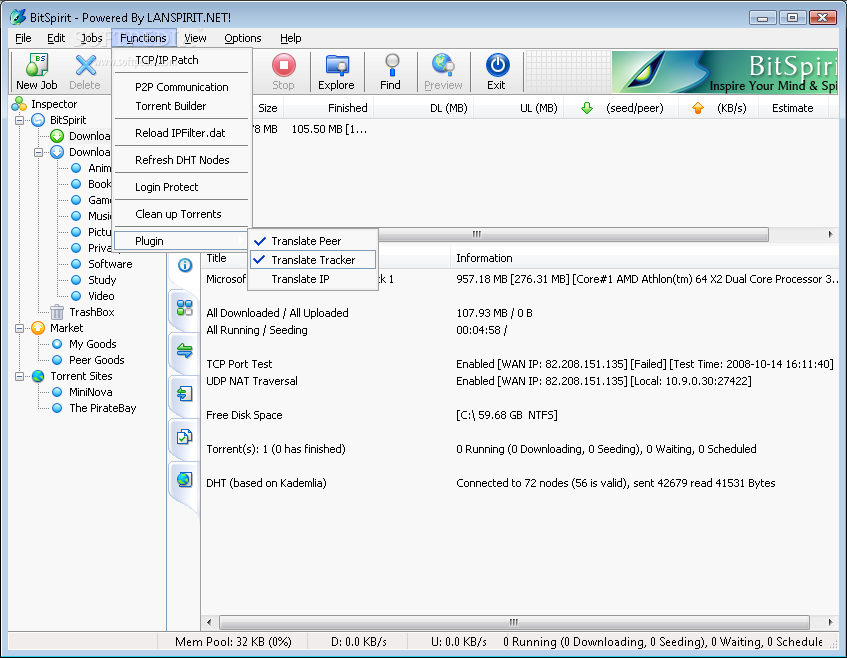
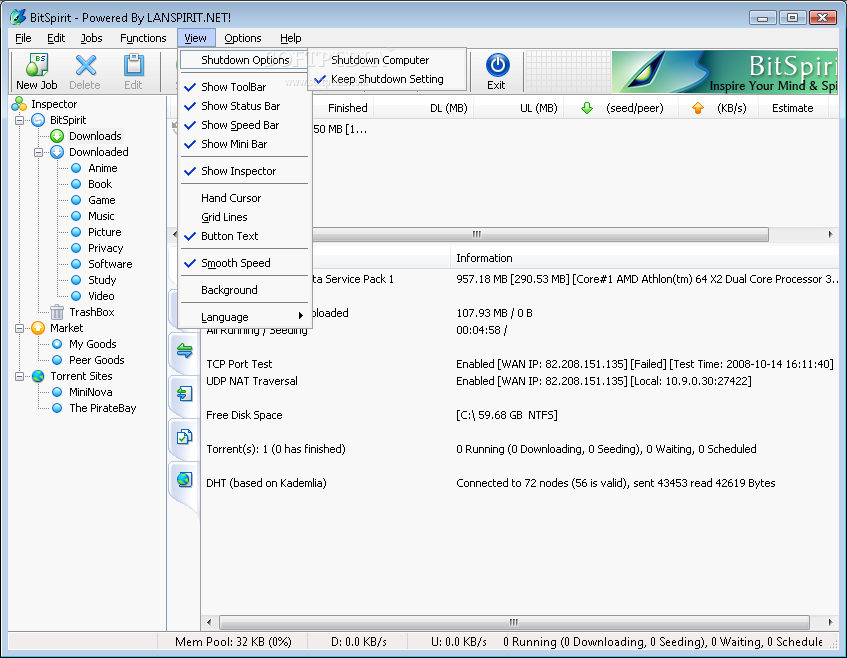
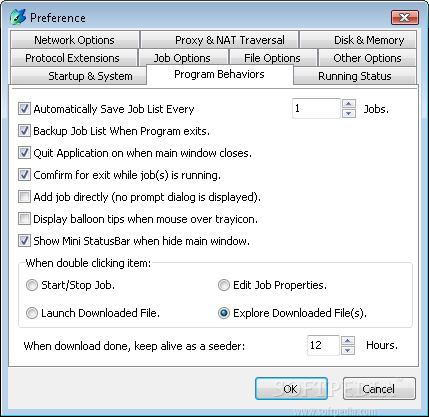
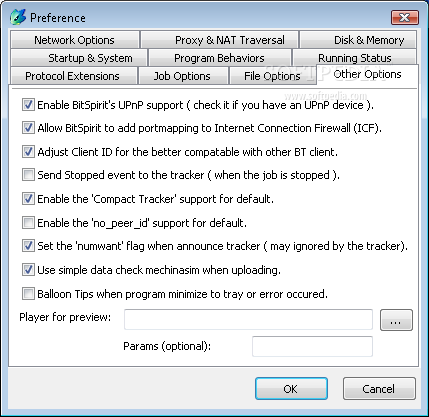
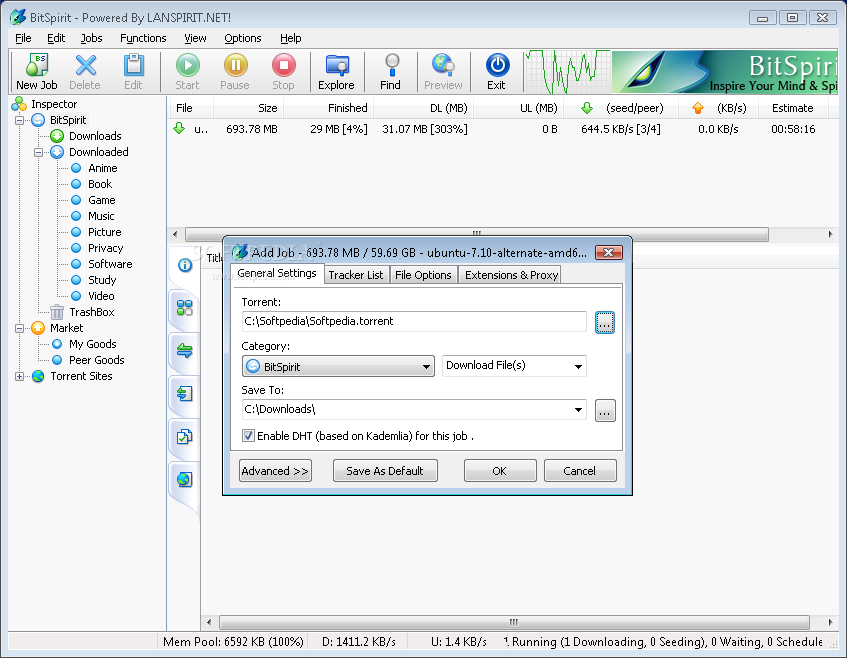
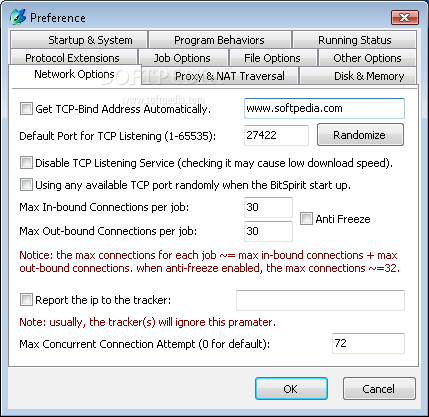
The interface, however, is very similar to the one used by other BitTorrent clients, packing the basic components in the main window. Thus, you can easily access the downloaded torrent files using the list on the left of the screen, while the right side provides info about the current downloads or uploads. It also comes with a rich 'Settings' menu as well as a 'Settings Wizard' for easier customization of the application. As a result, all user categories can easily get around it.
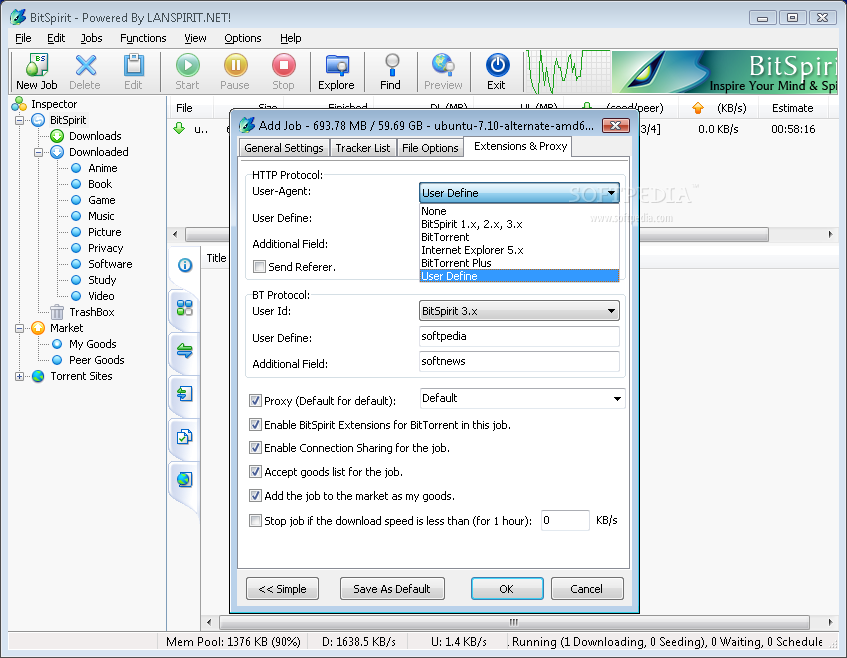
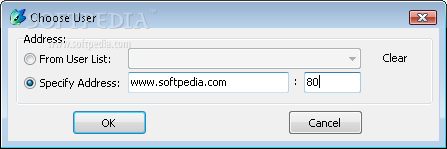
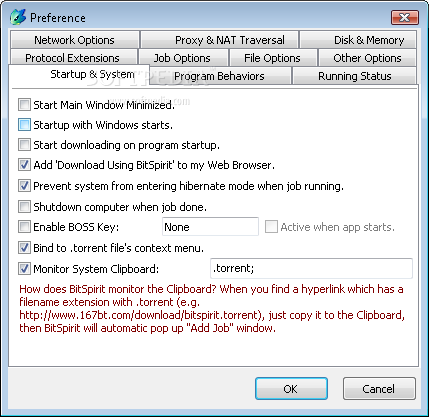
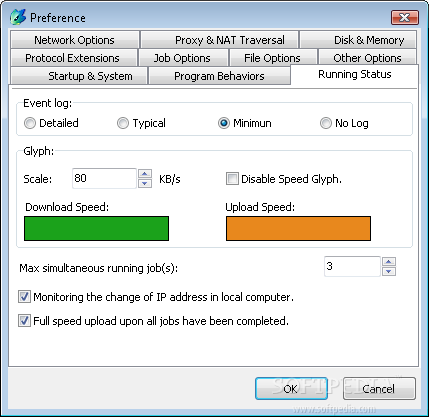
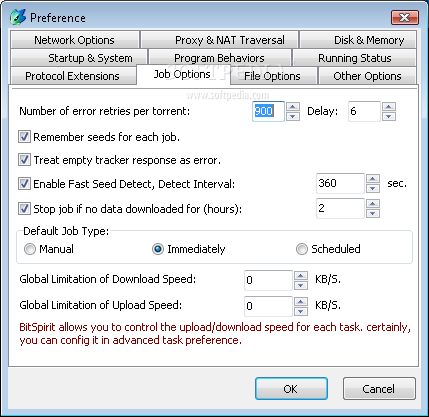
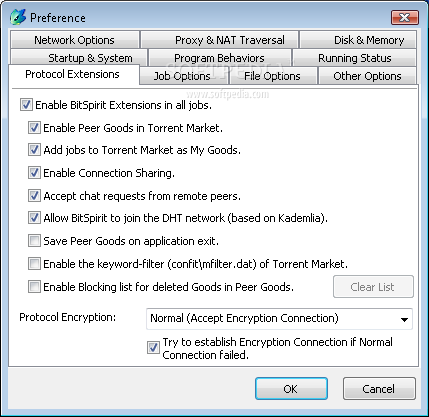
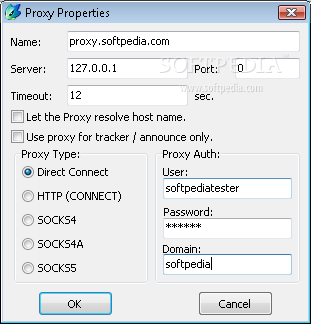
This tool offers a pretty impressive number of options. To be more precise, it is possible to take advantage of a download schedules, use a proxy server and communicate with others with the help of a P2P feature. You can easily set up global limitations for both the download and upload speed, as well as keep an eye on these values through a pop-up bar.
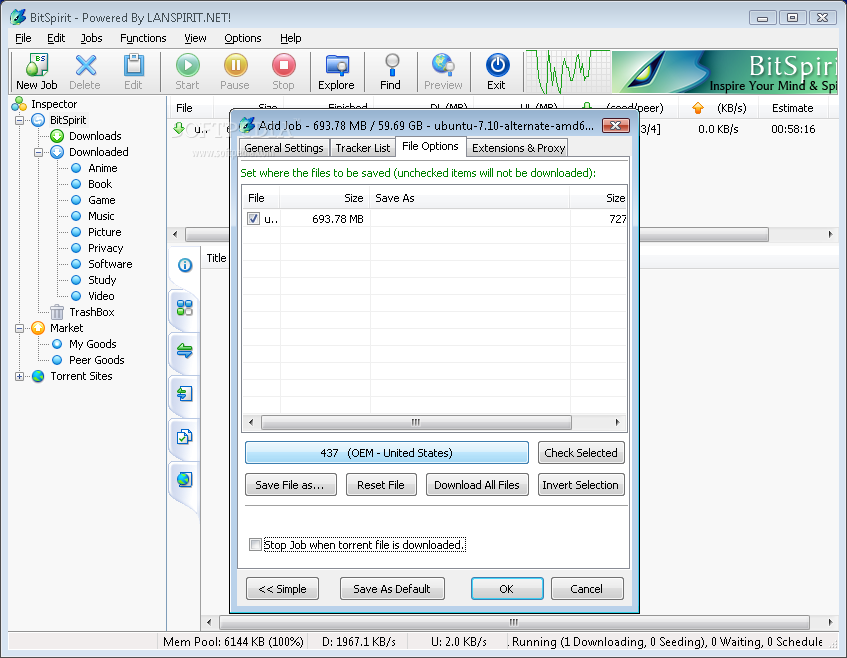
In addition to that, it is possible to pause, stop and resume all downloads, view information about a torrent, bring up processed pieces, peers and trackers, set a job priority, enable a “Super Seed” mode, place items in the built-in categories (e.g. anime, book, picture, privacy, music etc.) or edit them.
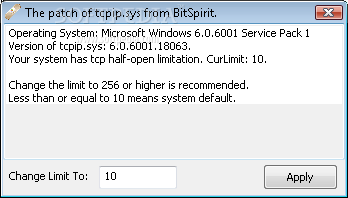
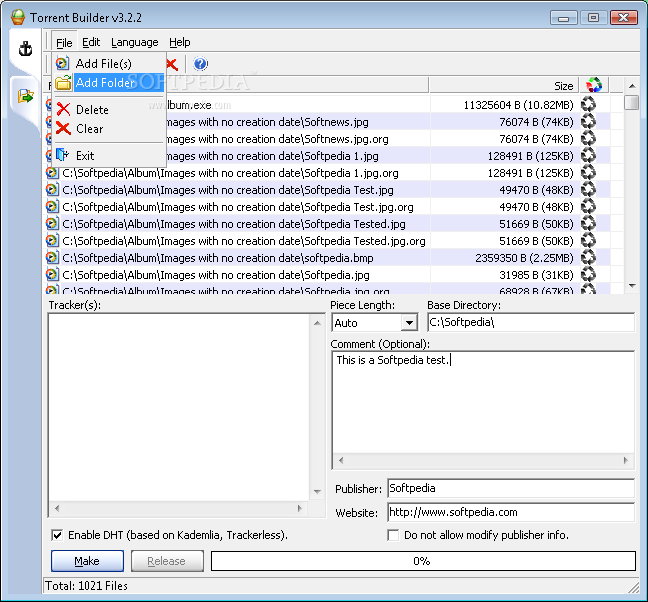
BitSpirit enables you to create new torrent files, patch the TCP/IP protocol so as to break down the limitations imposed by your Windows installation, shutdown the computer when a download is done, refresh DHT nodes and remove all unused items with just a click of the button.
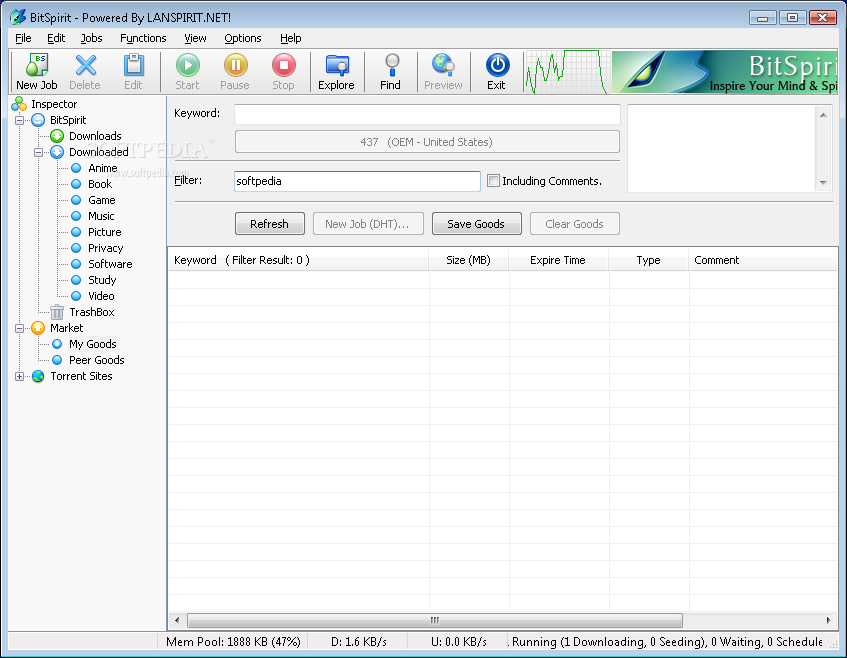
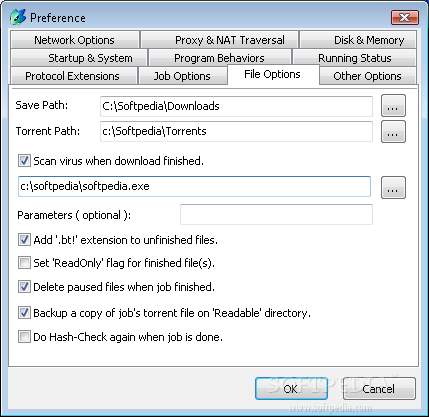
A small search function can be accessed through the menu bar, files can be previewed while the entire program can be password-protected, so that you can be sure only authorized people can access your data. This utility contains a virus scanner, it can reload the IPFilter.dat file and supports two plugins which enable you to translate peers and IP addresses.
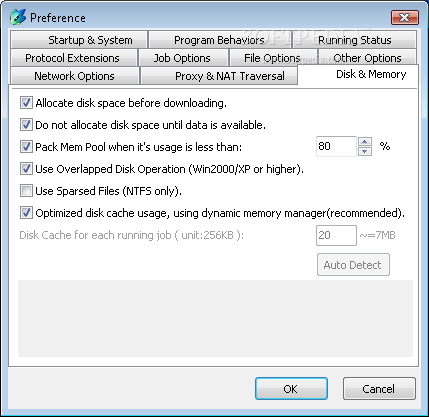
CPU and memory usage is usually quite low, yet if you encounter issues, you can easily change your download and upload speed limits. Jobs are completed in a pretty timely manner, the environment is intuitive and there are sufficient options to satisfy most power and novice users.
Taking all of this into consideration, we can safely say BitSpirit is quite an efficient and reliable piece of software, yet it does not stand in the same spot and as BitTorrent, µTorrent and Vuze Bittorrent Client.
Download Hubs
BitSpirit is part of these download collections: BitTorrent clients, Torrent Creator, Torrent Makers
What's new in BitSpirit 3.6.0.550 Stable:
- Improved: Reduced memory usage while IPFilter.dat is enabled;
- Fixed: sometimes BOSS Key doesn't work (v3.6.0.500 only)
BitSpirit 3.6.0.550 Stable
add to watchlist add to download basket send us an update REPORT- runs on:
- Windows All
- file size:
- 2.4 MB
- filename:
- bsv3.6.0.362.CN.exe
- main category:
- Internet
- developer:
- visit homepage
Bitdefender Antivirus Free
ShareX
Zoom Client

IrfanView

7-Zip
calibre
Windows Sandbox Launcher
Microsoft Teams
Context Menu Manager
4k Video Downloader

- Microsoft Teams
- Context Menu Manager
- 4k Video Downloader
- Bitdefender Antivirus Free
- ShareX
- Zoom Client
- IrfanView
- 7-Zip
- calibre
- Windows Sandbox Launcher