Softpedia
 

NEWS CATEGORIES:


NEWS ARCHIVE >>
SOFTPEDIA REVIEWS >>
MEET THE EDITORS >>
Home > News > Reviews > Mac software reviews

November 24th, 2010, 17:11 GMT · By Iulia Ivan

Review and Manage Your PDF Documents

SHARE:

Adjust text size:


PDF Studio by Qoppa Software See editor's ratings     Request a review
Version reviewed: PDF Studio 6.50

PDF Studio allows users to review and annotate PDF documents, highlight text, fill PDF forms, scan-to-pdf, change security and more.


Download PDF Studio
Features:

· View & Print: Open any pdf document and send it to the printer.
· Sticky Notes: Open any pdf document and add your sticky notes or comments to the document using text and graphic markup tools.
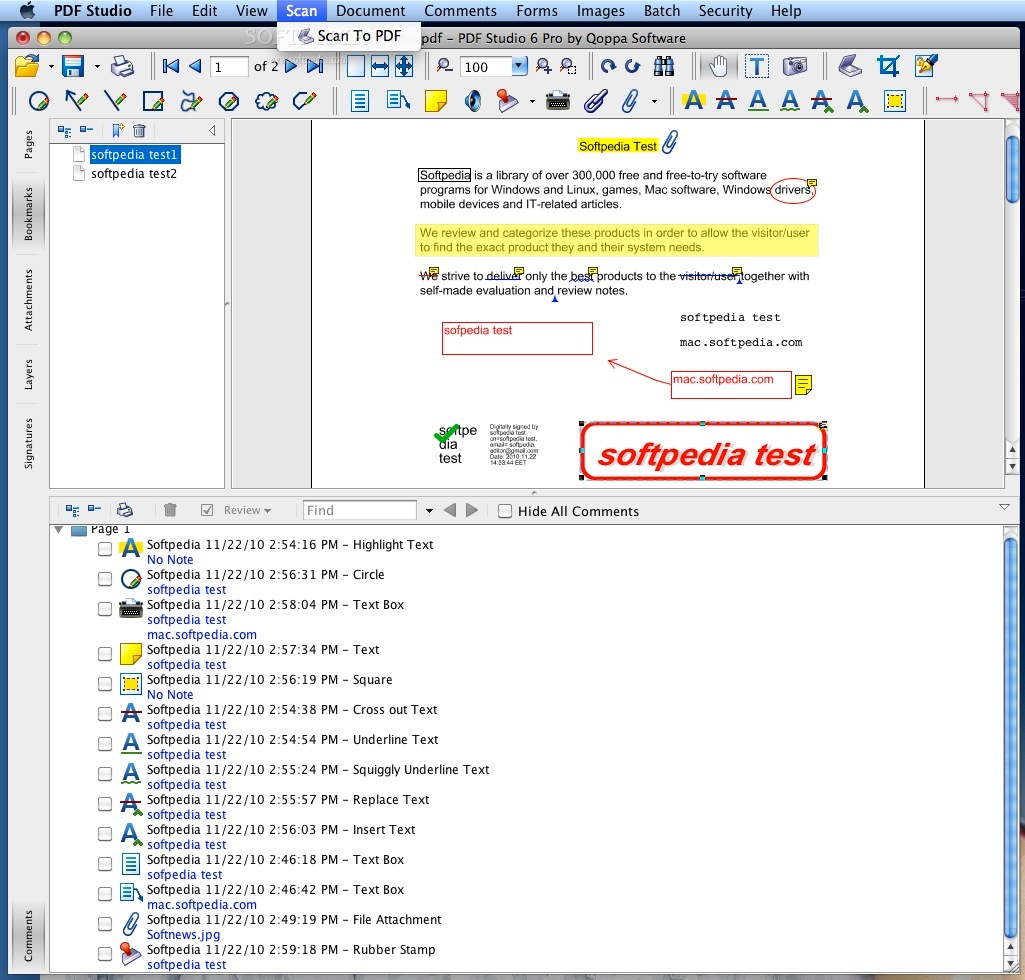
· Scan to PDF: Scan documents from any Twain compliant scanner into a new or existing pdf document.

PDF Studio
Enlarge picture
PDF files are very useful if you want your documents to look perfect in any situation, but PDF editing solutions do not exactly come cheap. PDF Studio from Qoppa Software provides some of the tools needed when dealing with PDFs and tries to be a cost efficient solution.

Sharing data using the PDF format is quite efficient since it is able to preserve its appearance regardless of the operating system or application used when opening the file. Still, revising such a document without the proper tools is exhausting.

PDF Studio is a Java based application that allows you to add comments, text and graphic annotations, stickies, notes, text boxes and more, in order to make your opinions crystal clear when working with your colleagues on a project or in any other situation that you might think of.

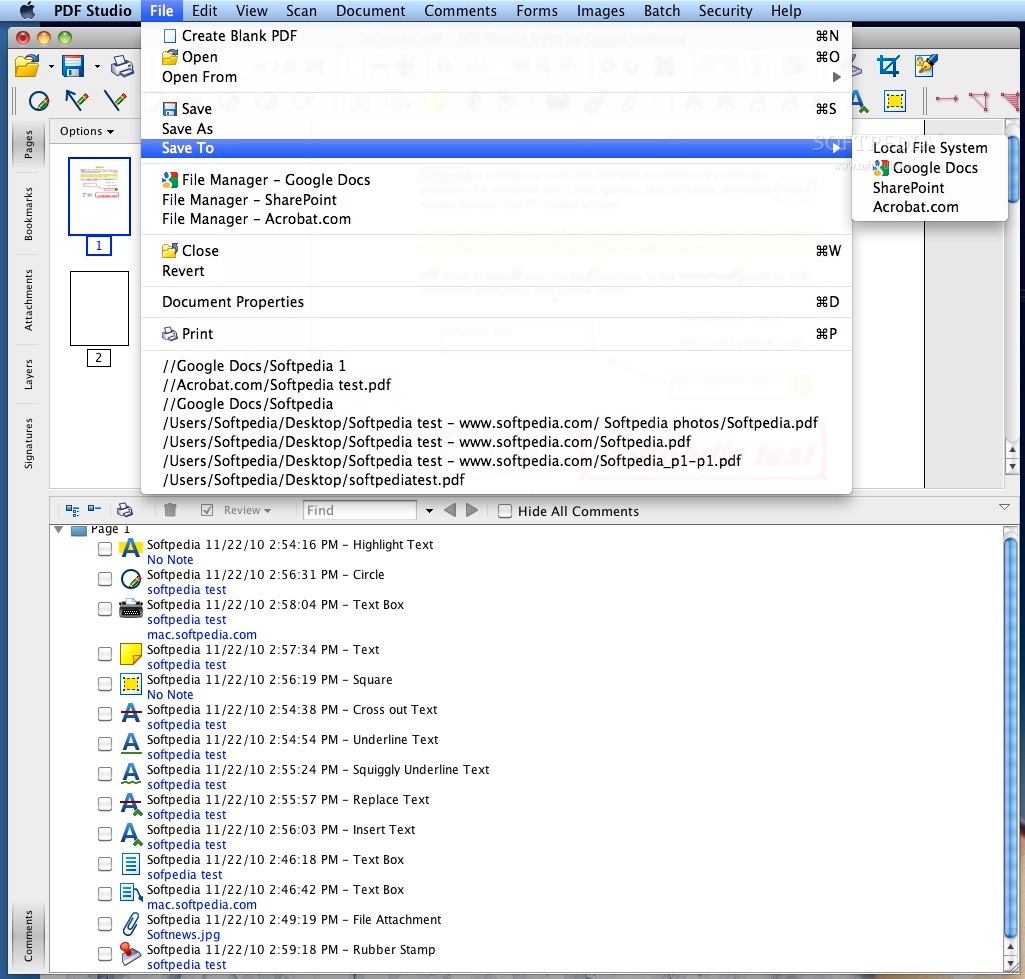
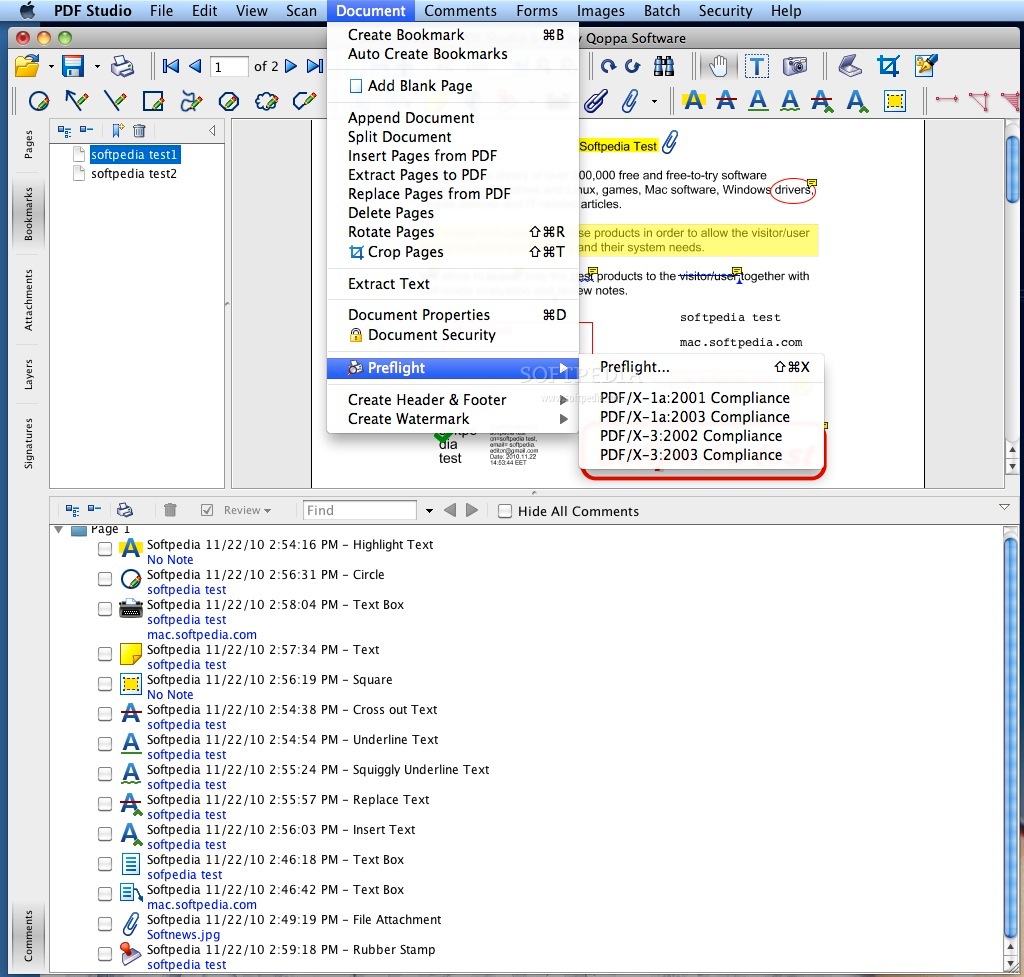
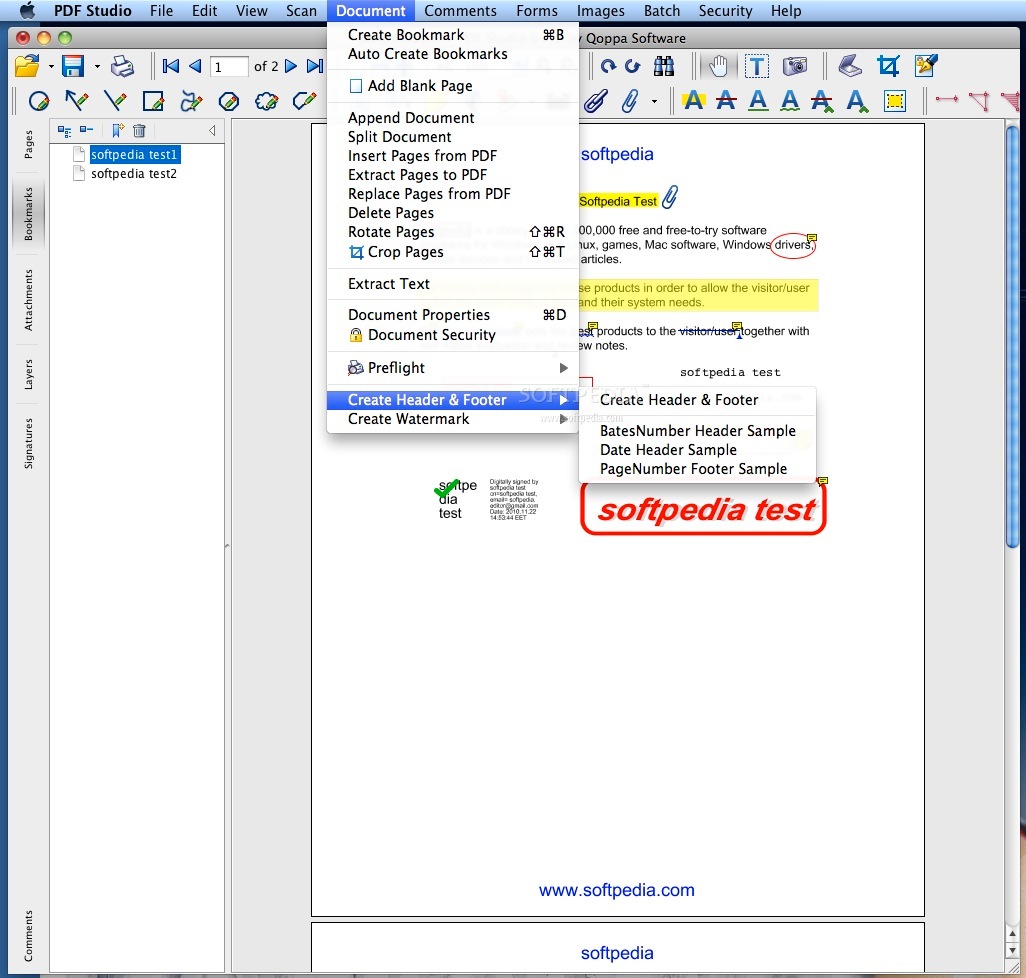
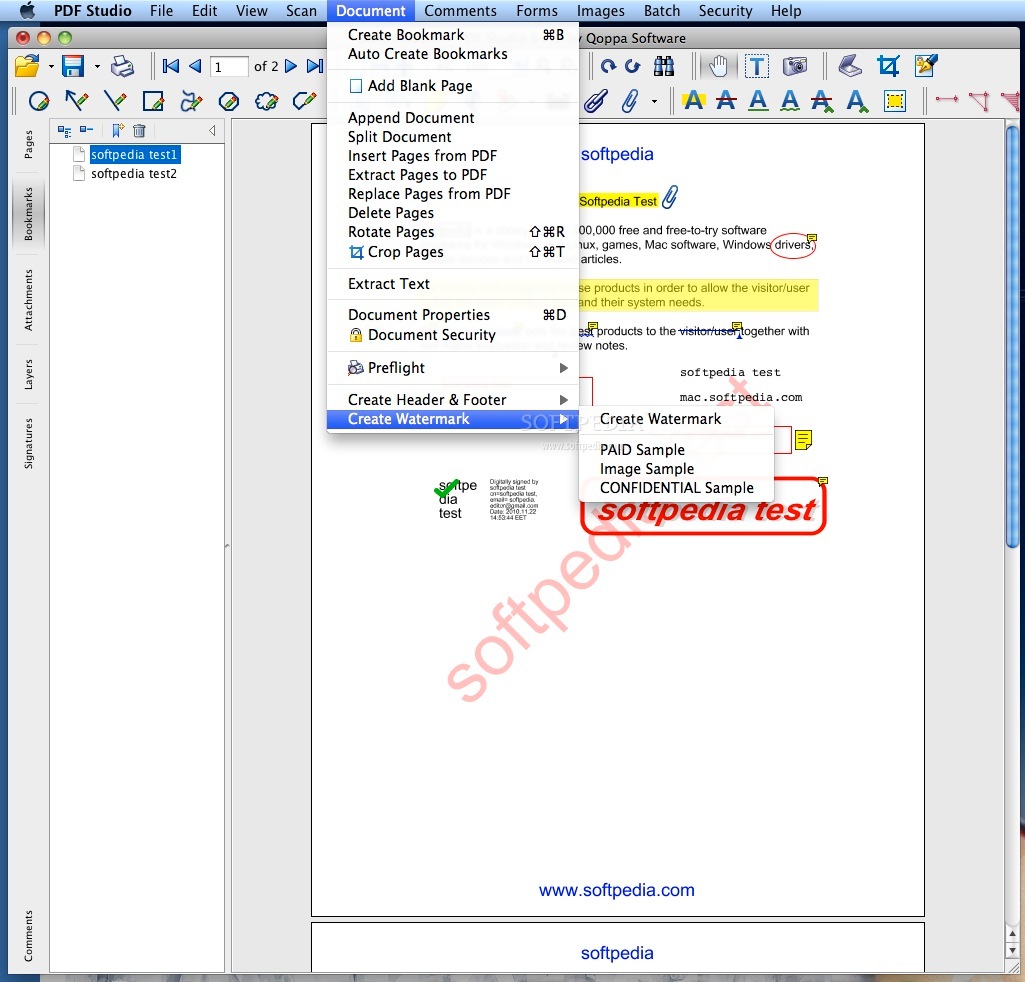
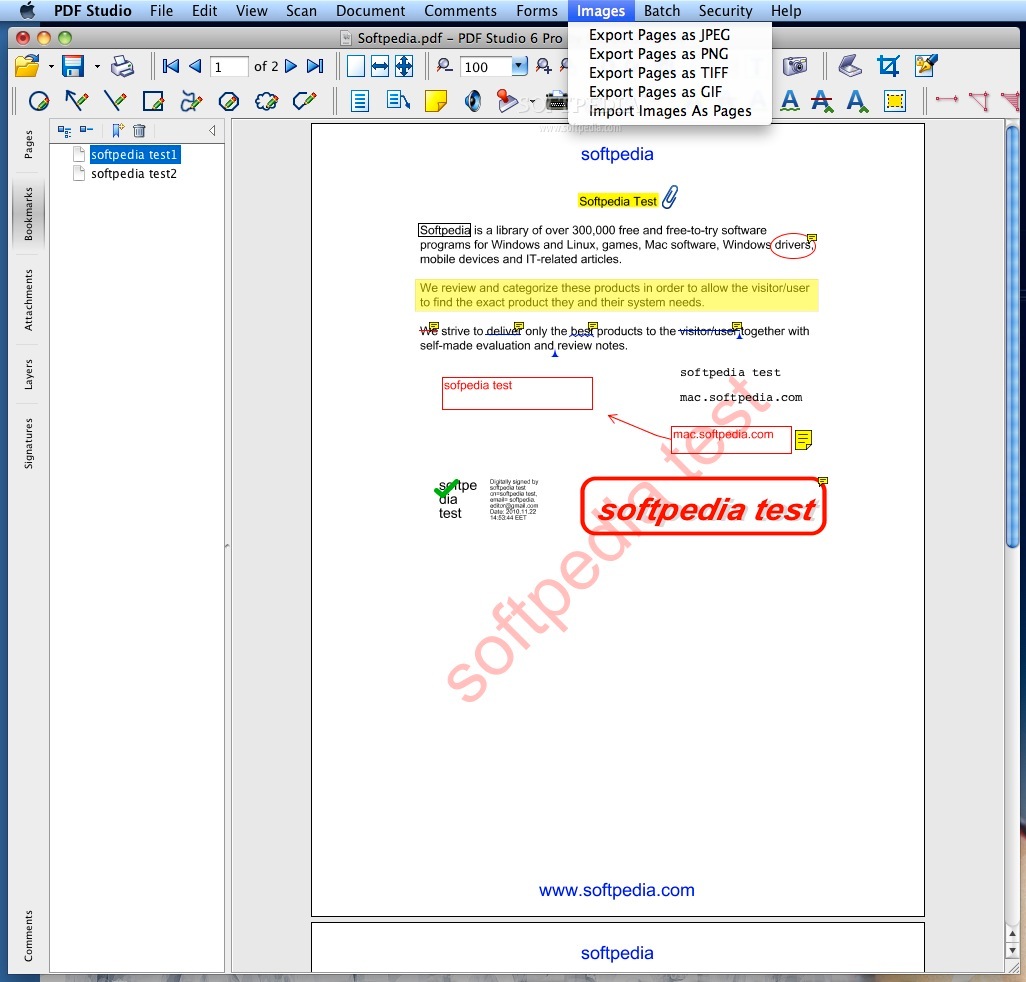
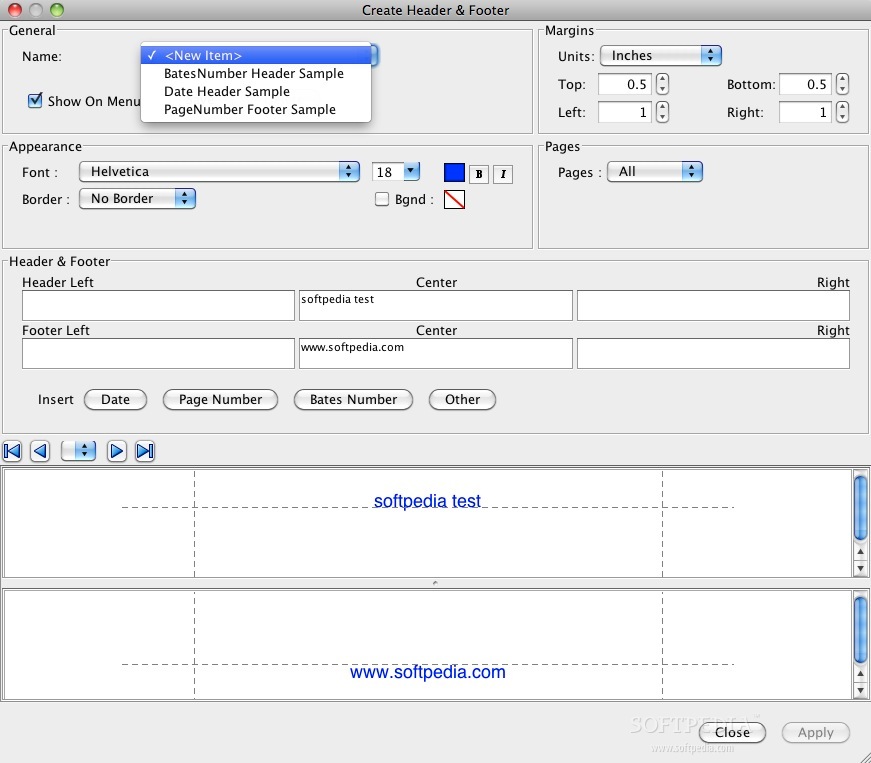
On the other hand, PDF Studio also allows you to add headers and footers, bookmarks, digital signatures, stamps, watermarks, import and export pages as images, crop pages, attach files, modify pages and split the document, while providing batch processing capabilities.

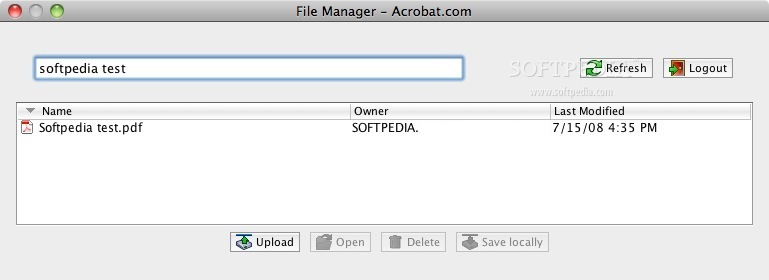
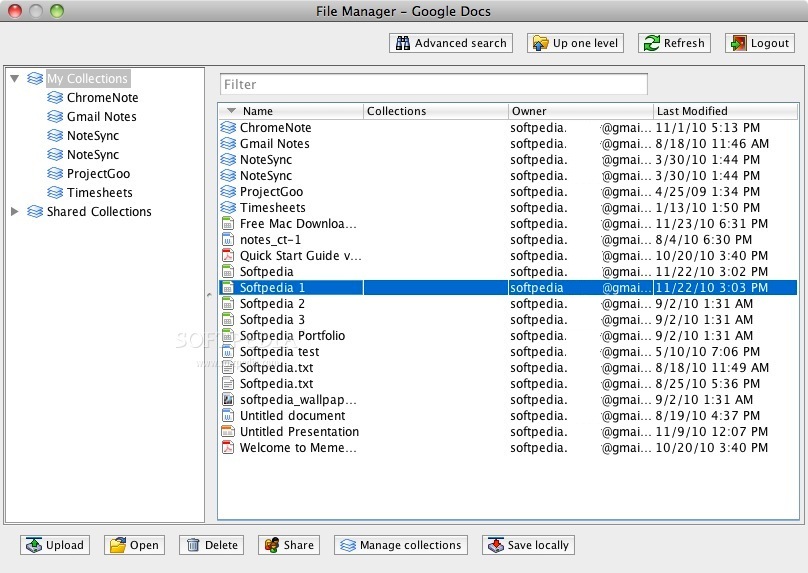
The best part is that PDF Studio is also able to make sharing the files easier by integrating with Google Docs, Acrobat Share and SharePoint.

The Looks

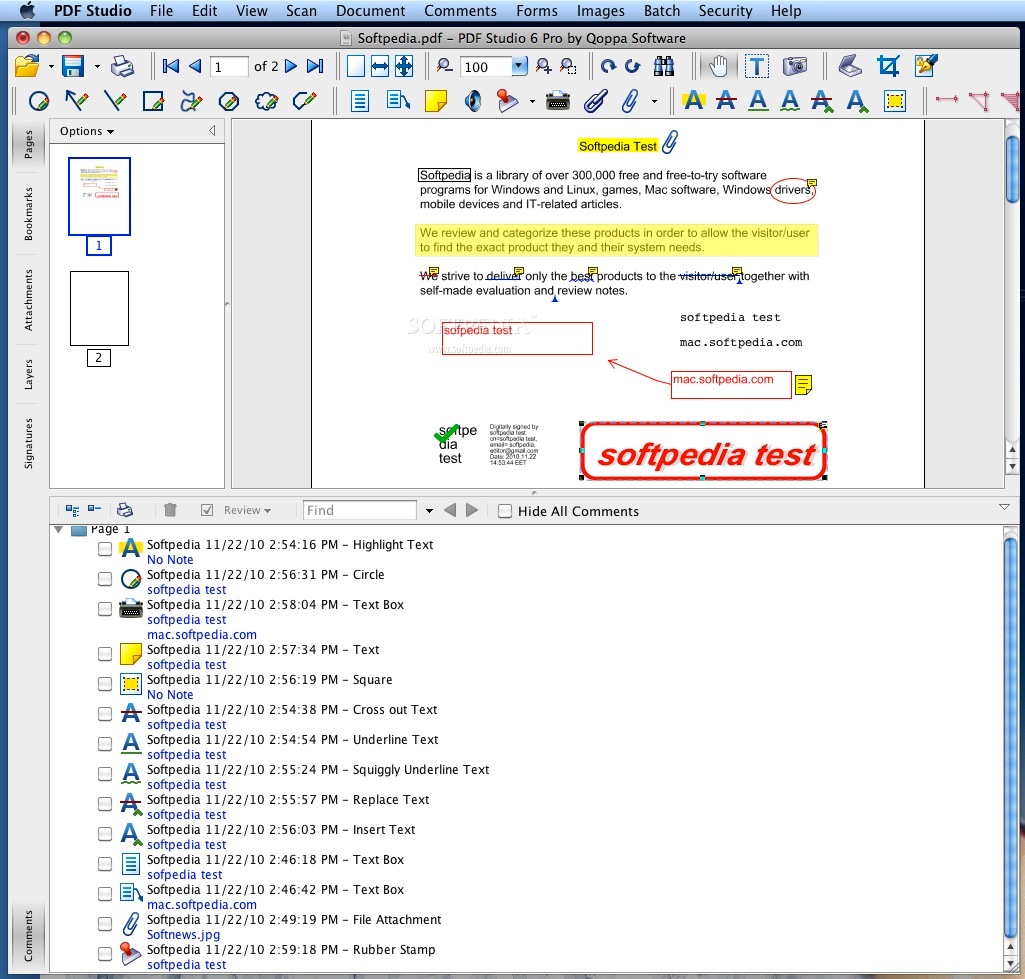
Since PDF Studio is using Java as a running environment, looks are left aside, and the application is mostly focused on functionality. The main window is very well organized and is centered on the document content, while on the left you can see the pages, bookmarks, layers, attachments and signatures.

When active, the Comments tab will be displayed on the bottom, while the top of the window will provide buttons for the most basic features.

Still, some capabilities are only available through the application menus, and need to be customized through various panels. The good part though is that each and every one is clean and organized, hence easy to get around.

The Works


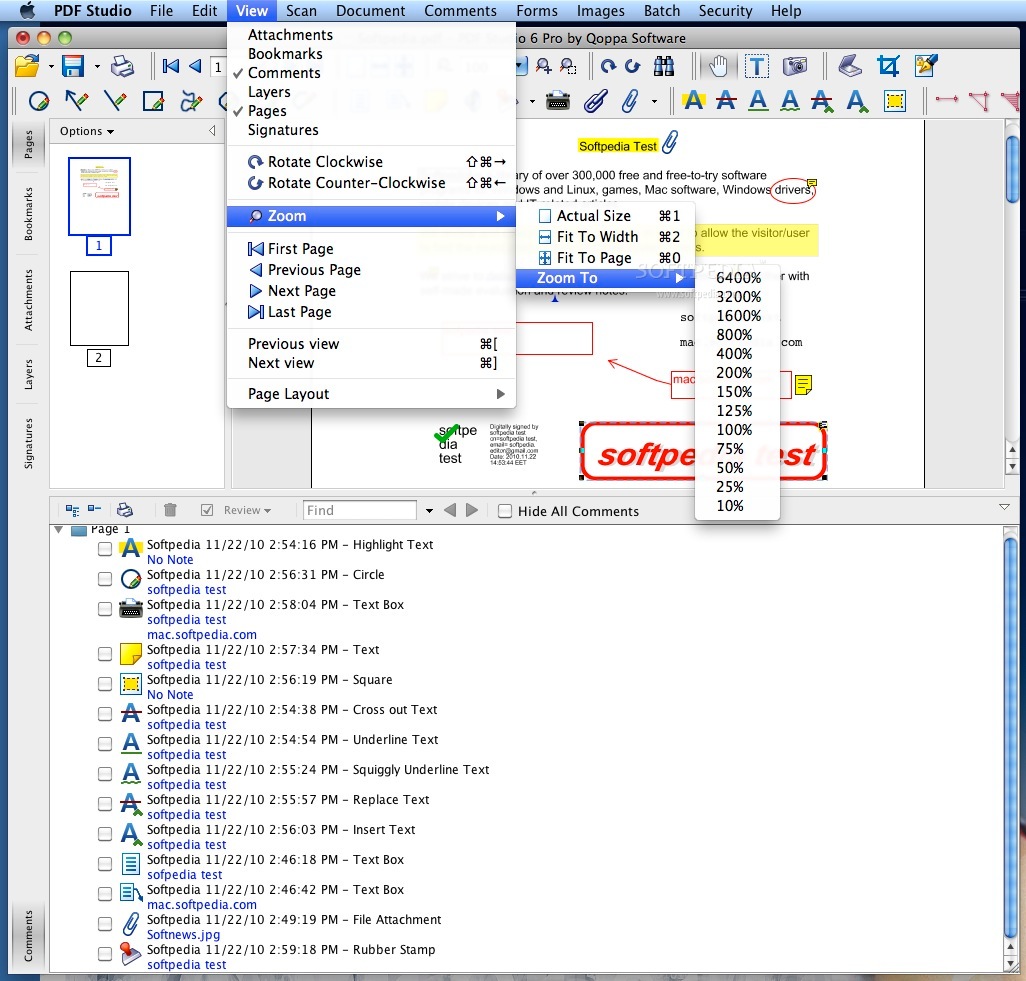
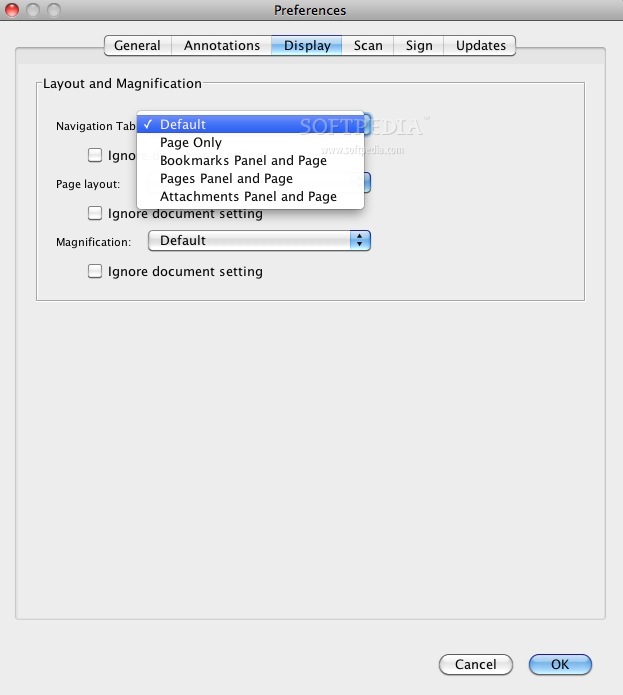
First of all, PDF Studio is a document viewer providing basic browsing capabilities, fitting options (actual size and fit to width or page), zooming and rotate functions, and allowing the user to change the page layout (single or facing, simple or continuous).

Further the application allows you to search for a certain text string, select text that you can copy or annotate, or take a snapshot. As a viewer though PDF Studio is missing at least one function: full screen.

But PDF Studio also allows you to create a new blank document or scan one to PDF. When creating a new document you can use the text box or the typewriter button to input text, although it will not automatically fit in the page.

The box can be moved or resized later on, while its properties can be accessed through the contextual menu revealed by a right click: the user can change the author, subject, appearance and content. Each element remains editable even between sessions, until it is flattened.

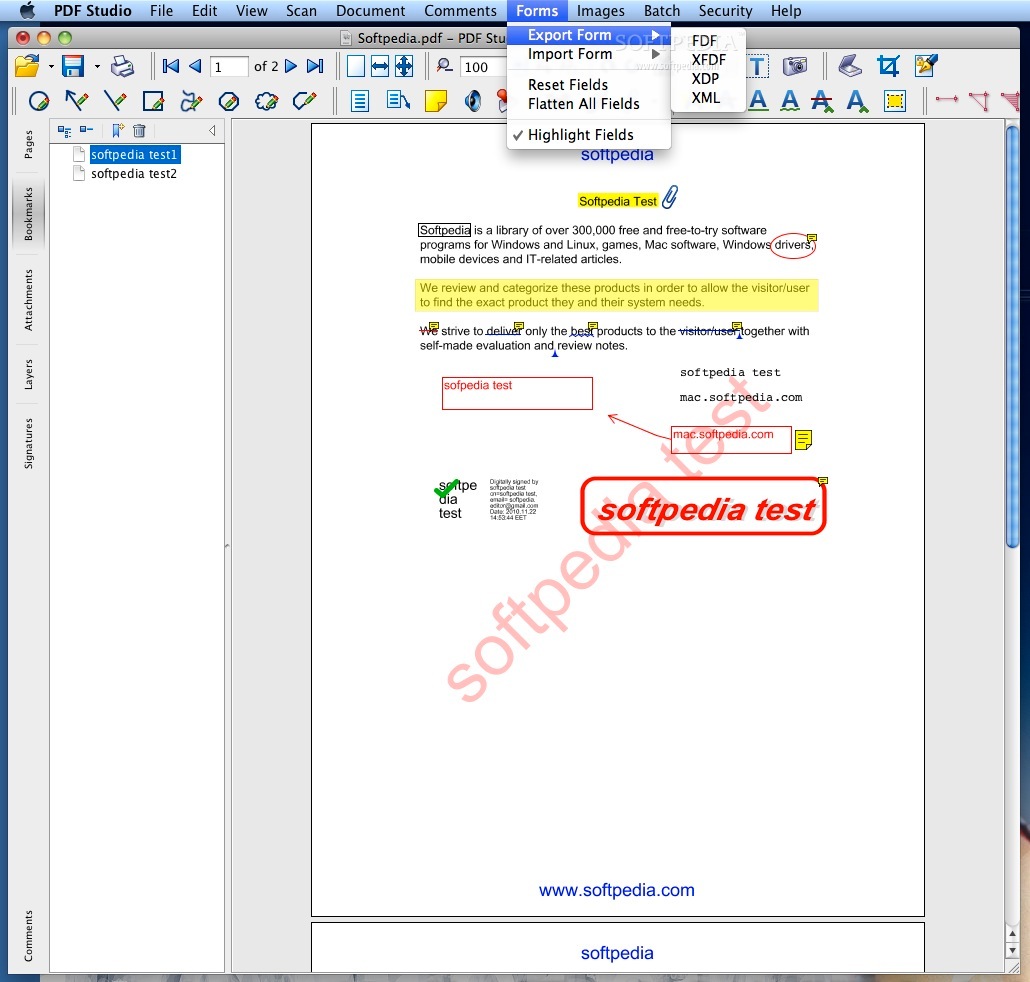
Taking all this into consideration, PDF Studio could be successfully used as a PDF editor with some limitations of course (e.g. you cannot create forms). PDF Studio gives you the possibility to open PDF files containing form fields but, as its developers specify in the user guide, the app may not be able to perform some of the attached actions.

On the other hand, if you are editing a document, you should think twice before deleting or flattening an element of any kind or using the cropping feature: PDF Studio does not provide an Undo function.

If the deletion of a certain element can be fixed relatively simple, a flattened element becomes imprinted in the page, losing all its editing features, so if you want to change anything you must start all over again.

Speaking of irreversible actions, make sure you save everything before trying to quit the application. PDF Studio is asking if you want to save your work or no but, if you choose to press the Cancel button the application will quit without saving anyway.

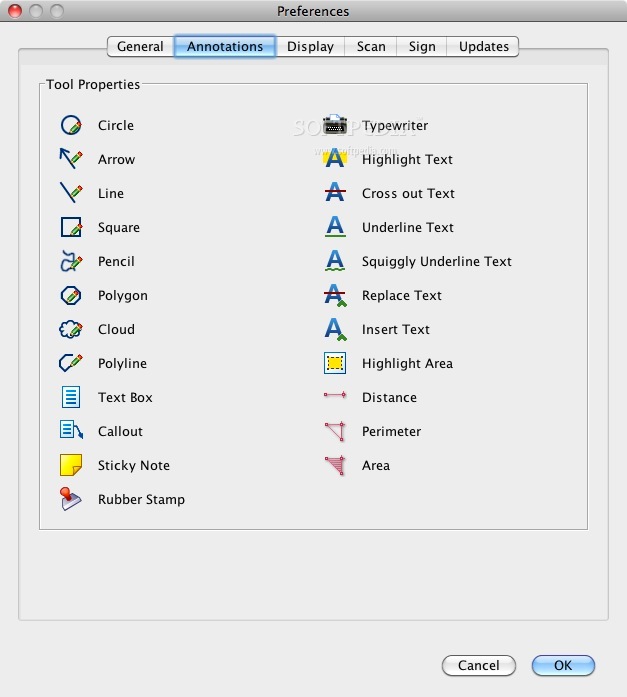
PDF Studio is probably most efficient when it comes to reviewing a document. The application allows you to add graphic notes (circle, arrow, line, square, pencil, polygon, cloud or polyline) but you can also use text boxes, callouts, sticky notes or highlight a certain area.

Note that when using irregular notes, once you are done you must access the contextual menu by pressing CTRL and click (or right click) and select Complete to deactivate the tool.

If you need to work on certain bits of text you can use the text markup features: highlight, cross out, underline, squiggly underline, replace or insert. Each one is treated as a different element with its own properties that can be accessed via the contextual menu.

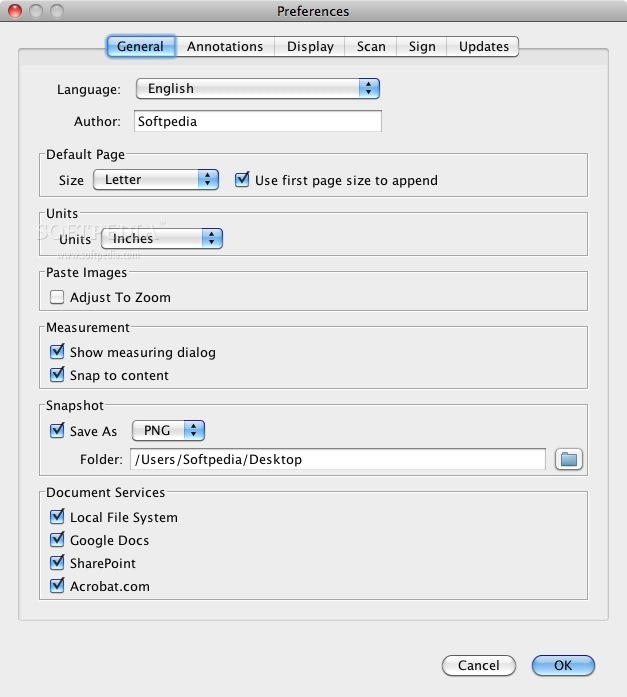
The same menu also allows you to remove the annotation. The Properties usually allows you to change the annotation appearance (color, transparency, border size and more), change the author, subject and view its history. Still, to change the default settings simply go to the Annotations panel in the Preferences window.

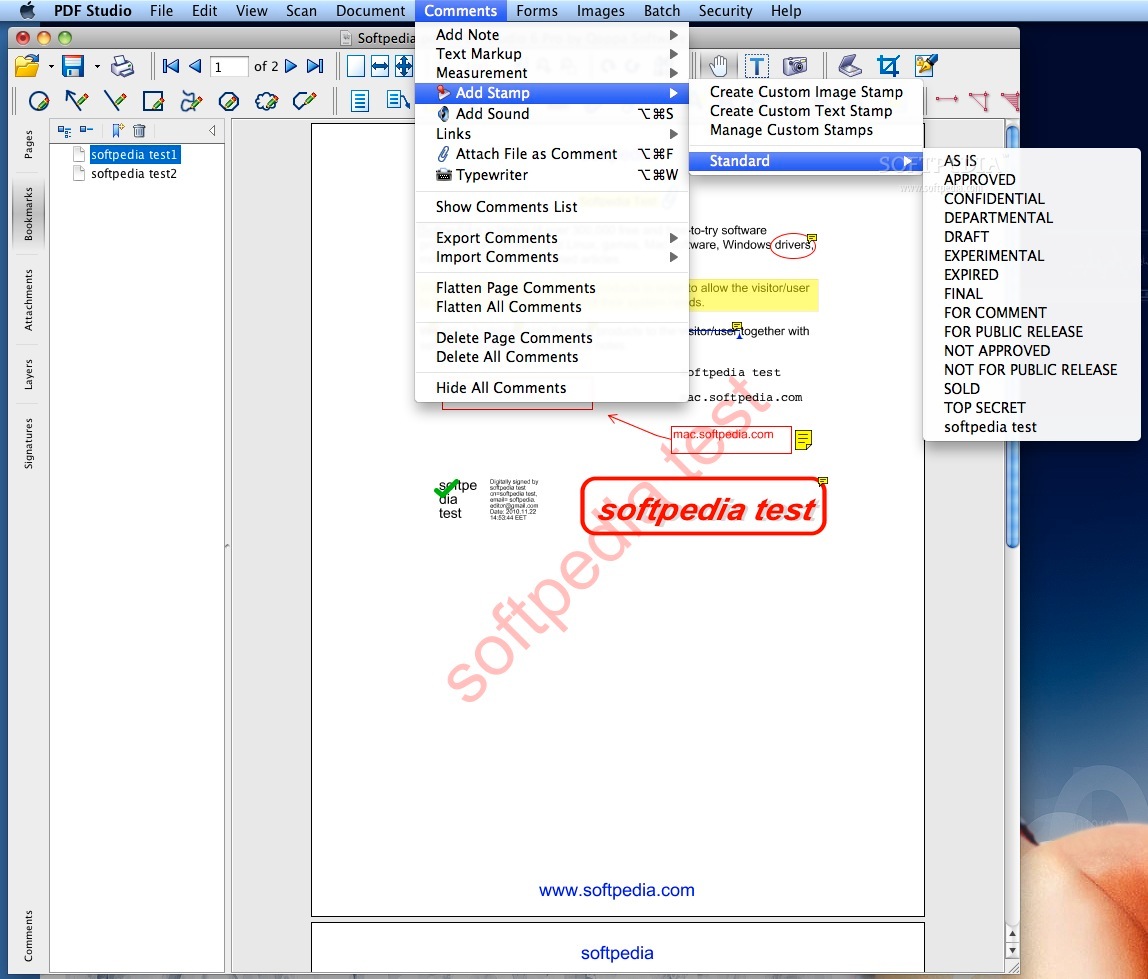
PDF Studio also allows you to add sound notes, hyperlinks, attach files or add rubber stamps (several templates are provided but you can create your own) and once you get used to the applications rules, which mostly rely on common sense, you will find yourself quite comfortably set.

To find your way around you can use the extensive user guide made available through the help menu (internet access is required), but make note that some things might not look the same since the included screenshots are made on a Windows operating system.

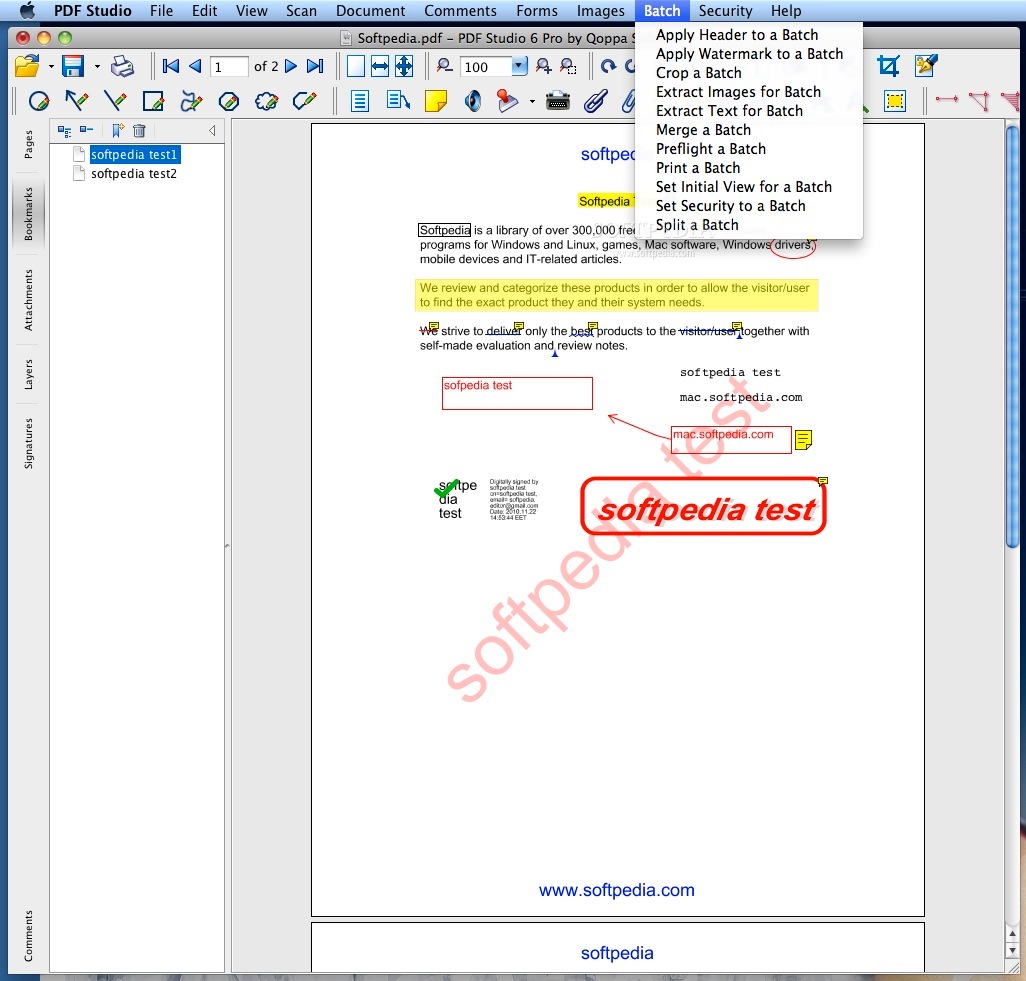
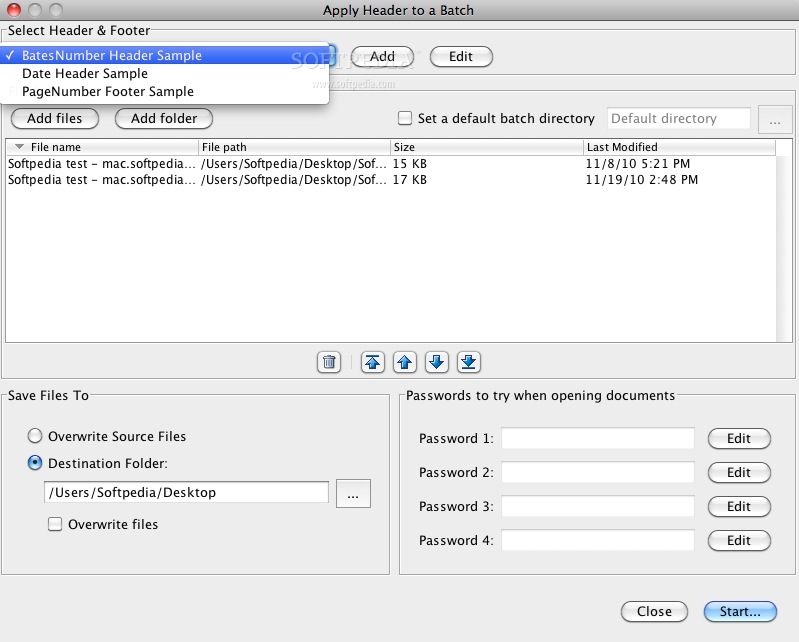
PDF Studio might prove to be extremely useful if you are dealing with a large amount of documents that need to be processed at the same time. The batch processing features can be accessed via the menu with the same name.

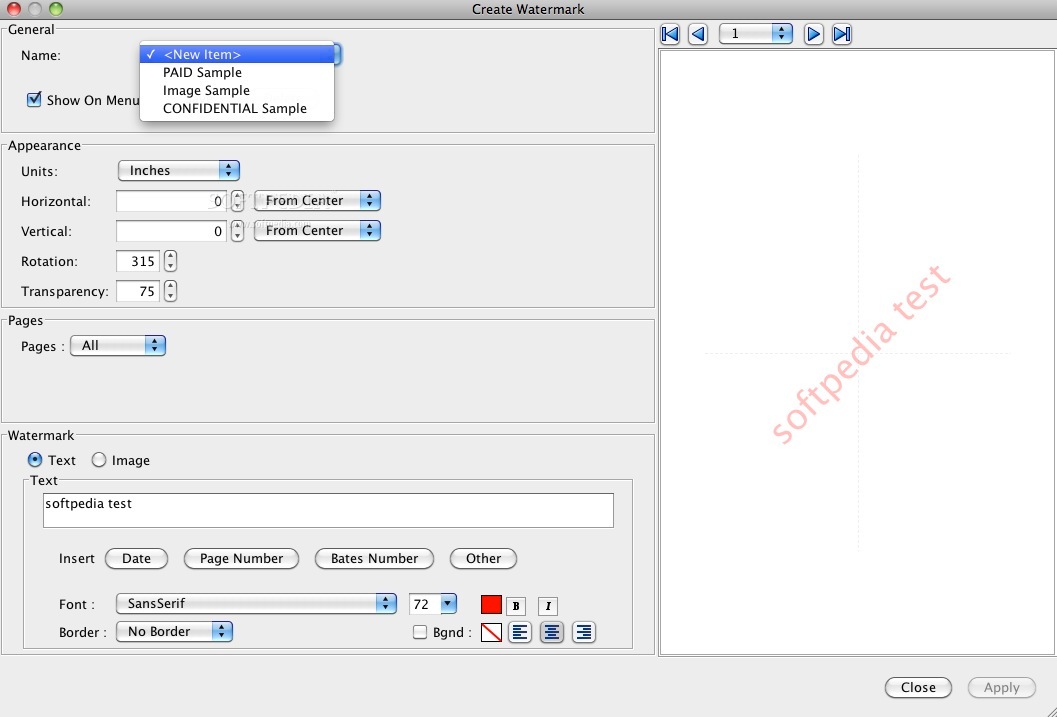
Using its batch features you will be able to apply a header and/or footer or a watermark on several documents by making just a couple of adjustments. Basically you must select the designs (you can use one of the available templates or create a new one), specify the files you want to process, the output destination and, most important for secured documents, up to 5 possible passwords to be used in order to open the documents.

Taking into account the customizations imposed by each action, the same rules apply to the other batch capabilities: crop, extract image, extract text, merge, preflight, print, split, set initial view or security.

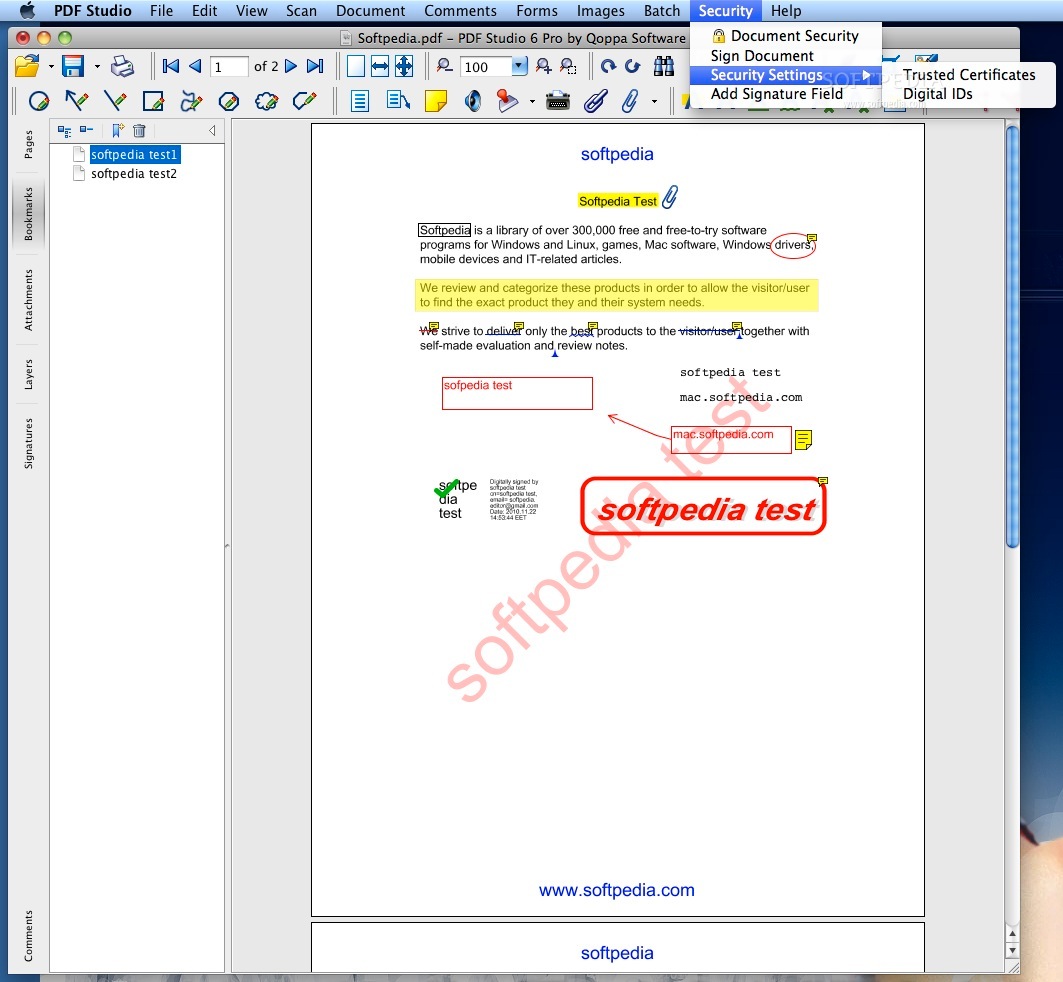
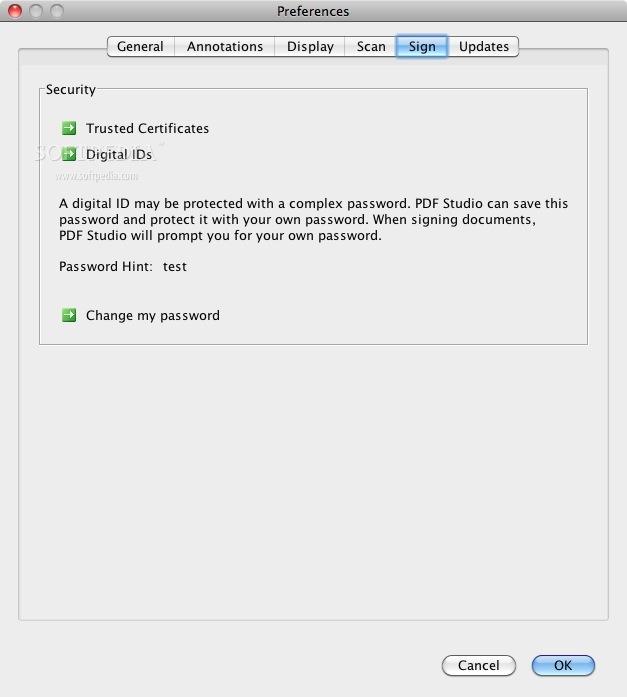
When it comes to securing a document you have the possibility to import trusted certificates or digital IDs. PDF Studio also gives you the possibility to create new digital IDs.

Of course some of these features only come in the PDF Studio Professional edition. The PDF Studio developers actually provide a form that should make quite clear the distinctions between the Standard and Professional edition HERE.

The Good

PDF Studio is a rather compact application, very well organized and easy to get around once you get the hang of things. The batch functions provided are great when dealing with a large amount of documents, while the integrated online services allow you to share and access data in no time.

The Bad

PDF Studio's interface is not at all focused on design: in fact even the application icon is featuring the company logo and is not at all personalized. Of course, appearance is not as important as functionality but it makes it look like somehow unfinished work.

Even if PDF Studio is running on Java and things should work the same on every operating system, there are still some things that look different. Unfortunately the user guide, as extensive as it is, provides screenshots only for the Windows operating system.

The Truth

PDF Studio is quite efficient and is able to provide the tools needed when dealing with PDF documents. Although it has its limitations, it can be seriously considered as a solution if you are mostly dealing with viewing and reviewing documents.

On the other hand, the PDF Studio demo version gives you the possibility to actually see for yourself if it is the right application for you.

Here are some snapshots of the application in action:

Review imageReview imageReview imageReview imageReview image
Review imageReview imageReview image

FILED UNDER:
review
annotate
manage
PDF
edit

EDITOR'S RATINGS:

User Interface: (3/5)
Features: (4/5)
Ease of use: (4/5)
Pricing/Value: (3/5)
Overall: (4/5)
  Final verdict: Very good   100% Clean Certified

TELL US WHAT YOU THINK:

4,769 hits · 7 comments · Link to this article · Print article · Send to friend · Subscribe to news

MUST-READ RELATED ARTICLES:


Annotation Transcriber, Helps You Transcribe and Annotate

Swift Share, Hands On Sharing Tool

Keep Track of Tasks for Any Project

READER COMMENTS:


Comment #1 by: Coolrat on 27 Mar 2011, 16:48 UTC reply to this comment

I've used PDF Studio for several years now and have been quite satisfied with its performance. Even though its JAVA, its quite responsive. It was, and perhaps still is the best PDF editor for Linux. A new feature that I appreciate is the new version 6 supports Chinese fonts.


Comment #2 by: Aldi on 04 Jun 2011, 08:15 UTC reply to this comment

Like coolrat, I also think that Qoppa PDF Studio is a good program and the best PDF solution on Linux.

The only piece I am missing is a Touch-Up feature to actually edit text. I am happy that this will be coming in version 7.


Comment #3 by: Dutch on 05 Jul 2011, 03:56 UTC reply to this comment

I just started using PDF Studio and really enjoy it. It's simple software and that's what I like.


Comment #4 by: Scientist on 02 Dec 2011, 23:16 UTC reply to this comment

I just recently came across pdfStudio for Linux. It is certainly a very nice tool, however, there are certain flaws I would like to see fixed in a version 7:
1. The pencil is not working precise enough for clean handwriting. When annotating scientific papers (rather small fonts) it is often difficult to read (Xournal does a better job for pure handwriting!). This might be a Java problem since a previous version of Xournal had a similar problem.
2. No pressure sensitivity
3. No Undo/Redo? Seriously?
4. No rubber? To erase handwriting you have to select and delete the complete object rather than just erasing part of it by turning around your stylus.
5. Changing colors is awkward. You first have to write what you want in the preset (set Preferences) color, then switch to hand tool, mark the object, go to properties, and then change the color. This takes too long. Basic colors should be available as toolbar!
6. Text annotations can be seen in AcrobatReader but NOT in okular unless they are flattened (merged with the pdf). Hence not really linux compatible.
7. Be careful when using pdfStudio for "Peer Reviews", make sure you change author setting to ensure anonymous annotating. An annotate anonymously button, or the possibility to select from different identities would help scientists.

Don't be fooled! Otherwise this is a * good and stable pdf annotator. I was desperately waiting for a tool like this. It is not yet a diamond and it certainly needs improvement but I can definitely see what it could be!


Comment #5 by: Fellow Scientist on 13 Jan 2012, 10:13 UTC reply to this comment

My usage environment: (job = scientist & programmer, OS = Linux-Fedora13, terminals = PC & AndroidTablet )

I installed this software several hours ago and used it to make notes to myself and my boss about a published scientific article.

Negatives:
Agreed that no Undo/Redo is a pain.
Agreed that no standard color bar is a serious pain, especially for style editing done retroactively (e.g., after 3 comments added, you want to change the font color of all three comments and the color of the bounding boxes).
[[ Linux note 1: Evince did not show highlighted text correctly (highlight is 0% transparent).
Linux note 2: xpdf did not show sticky note contents when the mouse is placed over the note.
Linux note 3: Acrobat Reader correctly showed highlights and sticky note contents. ]]
Not sure if it is only Linux or not, but I could not input Japanese into a text box.

Positives:
Generally very easy to use.
Default colors and styles can be set for almost any markup (note, drawing, etc) you want to add.
Multi-OS support.
Android OS support (via qPDF Notes) also available.
Even the full version of PDF Studio is cheaper than academic licensing of Adobe Acrobat X.
Necessary learning time is minimal.

Overall, I like it a lot, and plan to recommend it to my colleagues.


Comment #6 by: xraydoug on 29 Jan 2012, 04:24 UTC reply to this comment

PDF Studio is great if you need advanced PDF functionality. It has an extensive set of annotation and markup tools, well-designed and easily accessible. For my own uses, one of the most important that is not commonly found is adding scaled lines (like measuring scaled distances on an architectural plan), which this does very well. While it does not respond to many common trackpad gestures (zoom, shrink, for example), it is overall a very nice alternative to the bloated Adobe product when you need advanced PDF functionality on the Mac, especially if you need to measure scaled distances.


Comment #7 by: MB on 14 Feb 2012, 09:50 UTC reply to this comment

PDF Studio 7, great except the Drop and drag comments box is unreadable as it is so small, why would you create something that you can't read until you drag it over into the document,

Copyright © 2001-2012 Softpedia. Contact/Tip us at

WindowsGamesDriversMacLinuxScriptsMobileHandheldNews

SUBMIT PROGRAM   |   ADVERTISE   |   GET HELP   |   SEND US FEEDBACK   |   RSS FEEDS   |   UPDATE YOUR SOFTWARE   |   ROMANIAN FORUM