
Synchronize your multiple computers with a minimal level of effort on your side by using this lightweight and intuitive application. #Sync File #Backup File #Transfer File #Sync #Backup #PC2MAC
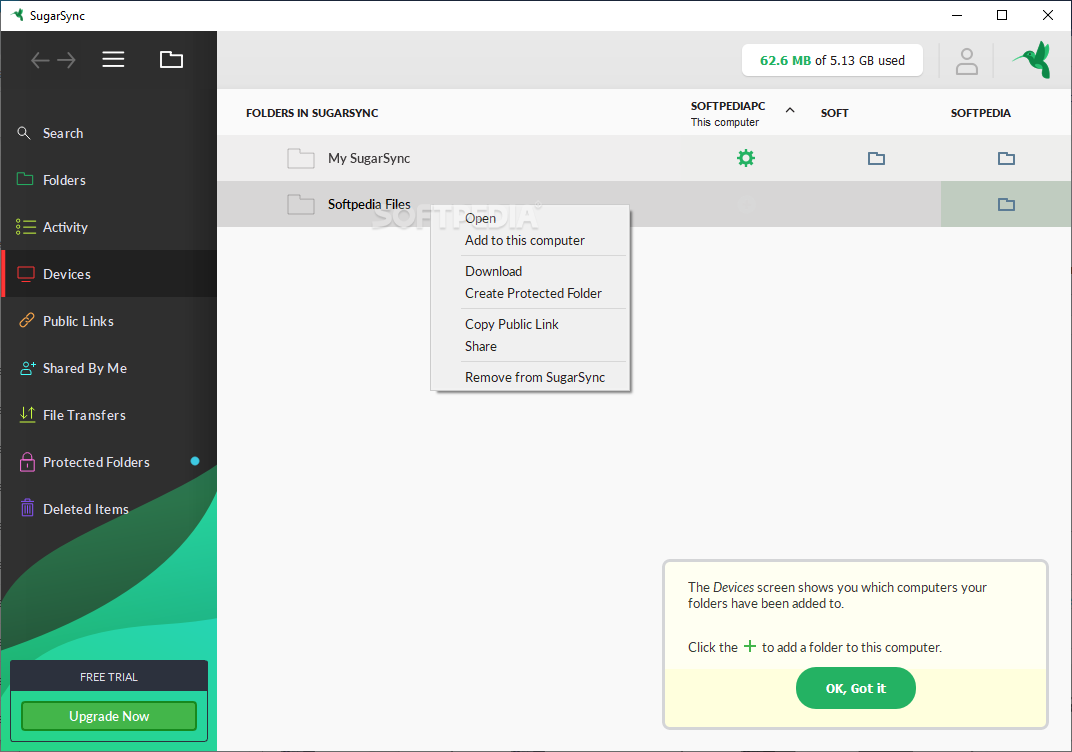
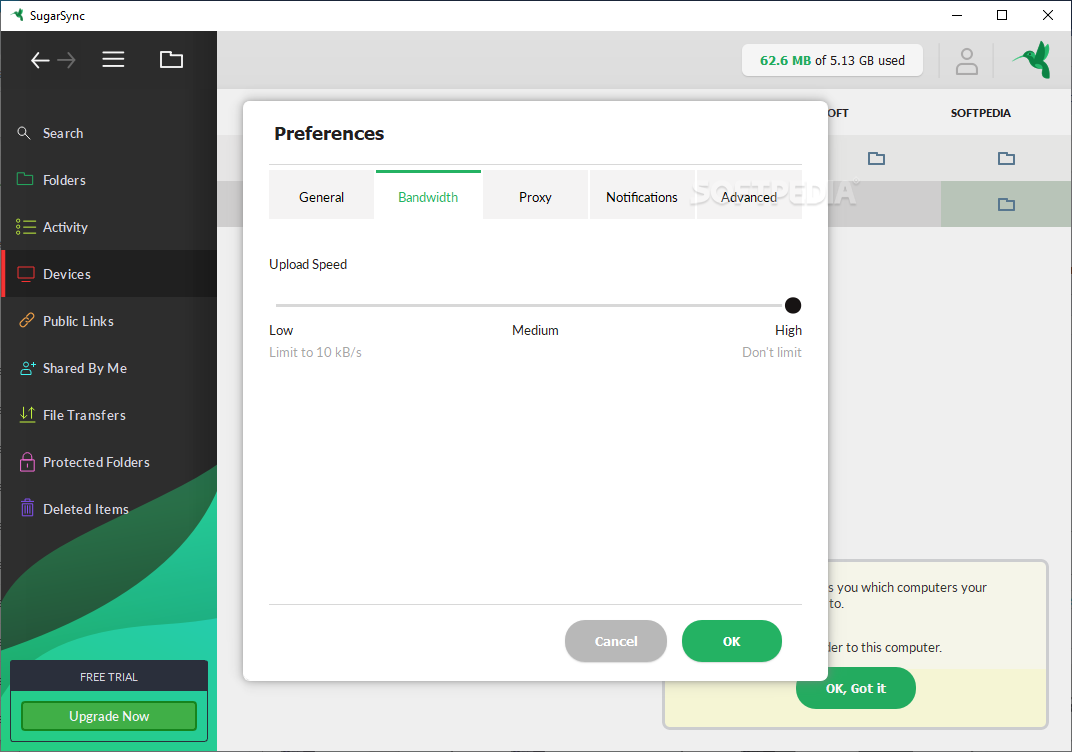
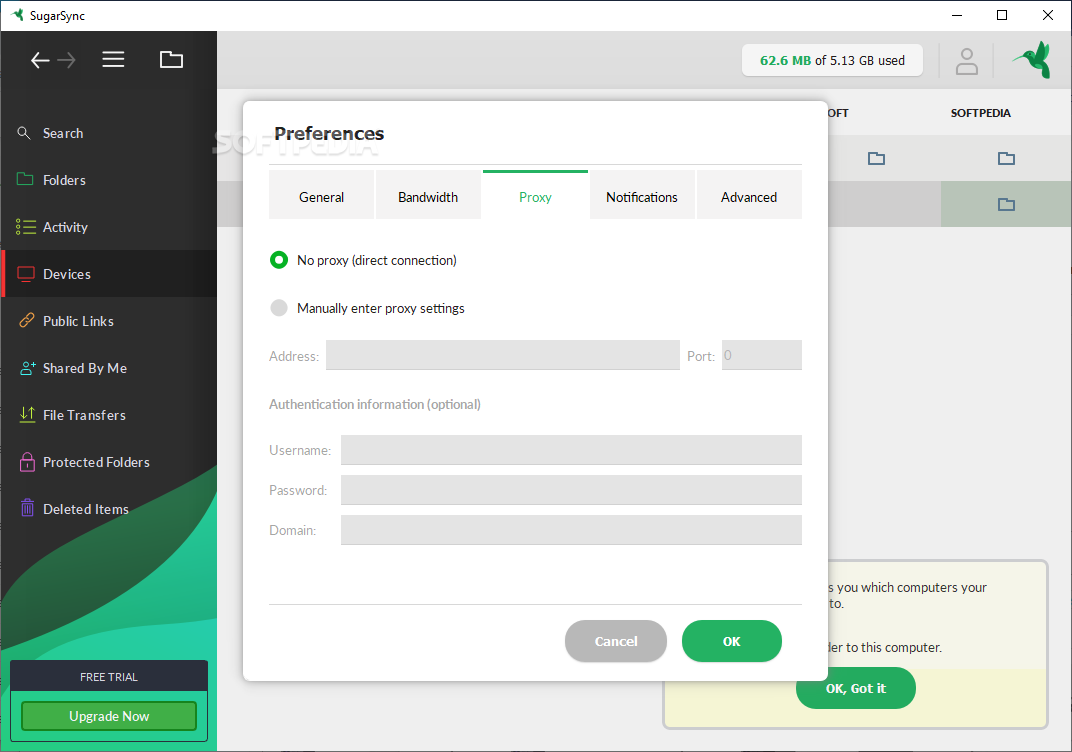
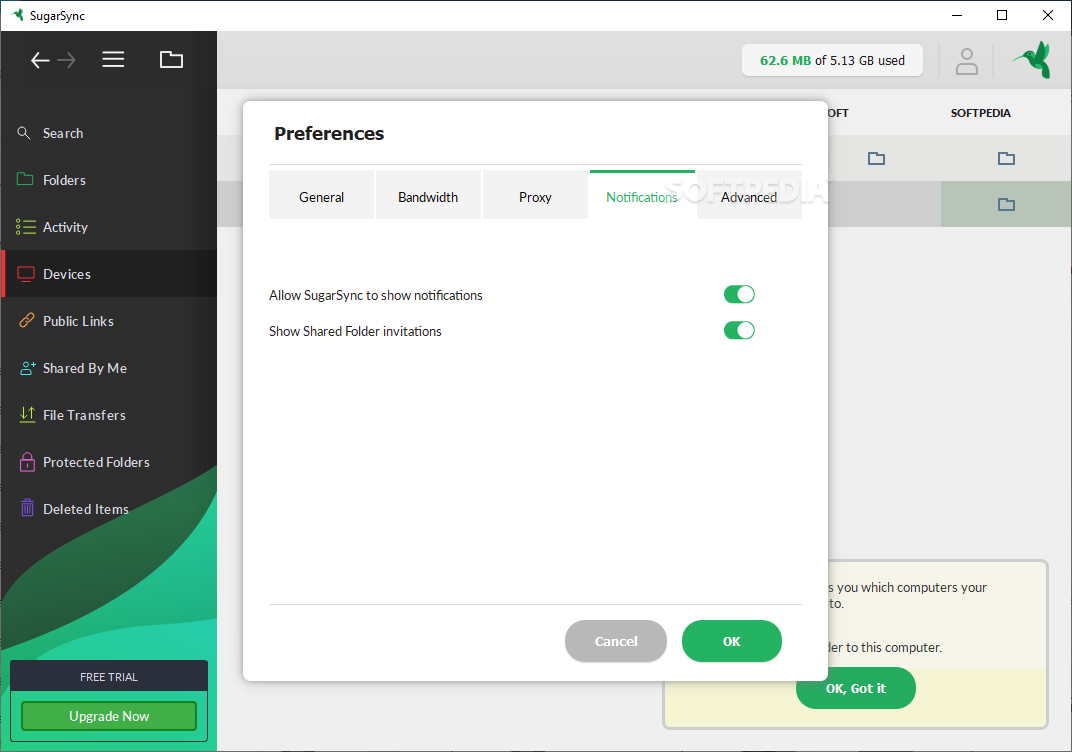
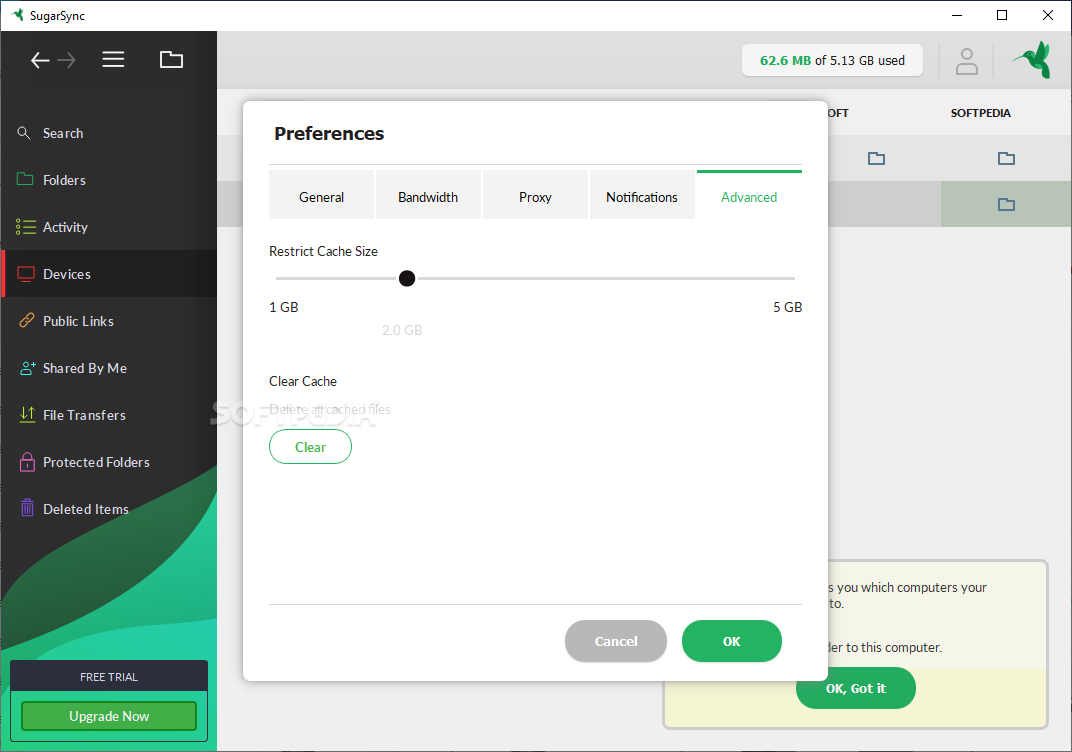
SugarSync is an efficient and user-friendly cloud storage utility which enables you to upload your most important documents and keep them within reach for every time you need to work with them, allowing you to synchronize the contents of home folders with the ones at the office.
In order to work with the application, you need to create an account with an email address and a password, which will enable you to access your data from any computer with Internet access.
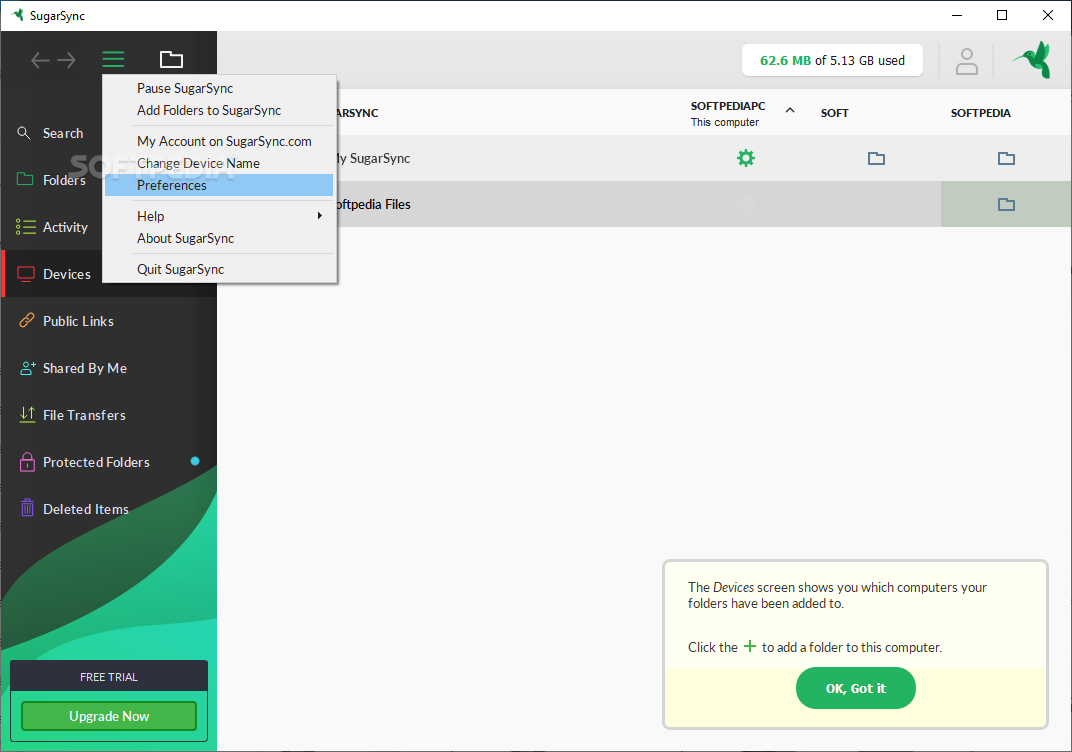
The program features a clean and modern look, making use of a tabbed interface to allow you to switch between its various functions, specifically 'Cloud', 'Sharing' and 'Activity'. It offers several menus for easier access when trying to sync or share a specific directory.
In order to upload a folder to your account, you can use the 'Select' button on the lower edge of the screen and browse through your PC for the item that you need, then loading it by clicking on the 'Add' button. Depending on your Internet speed and the size of the package, this process can have a varying duration.
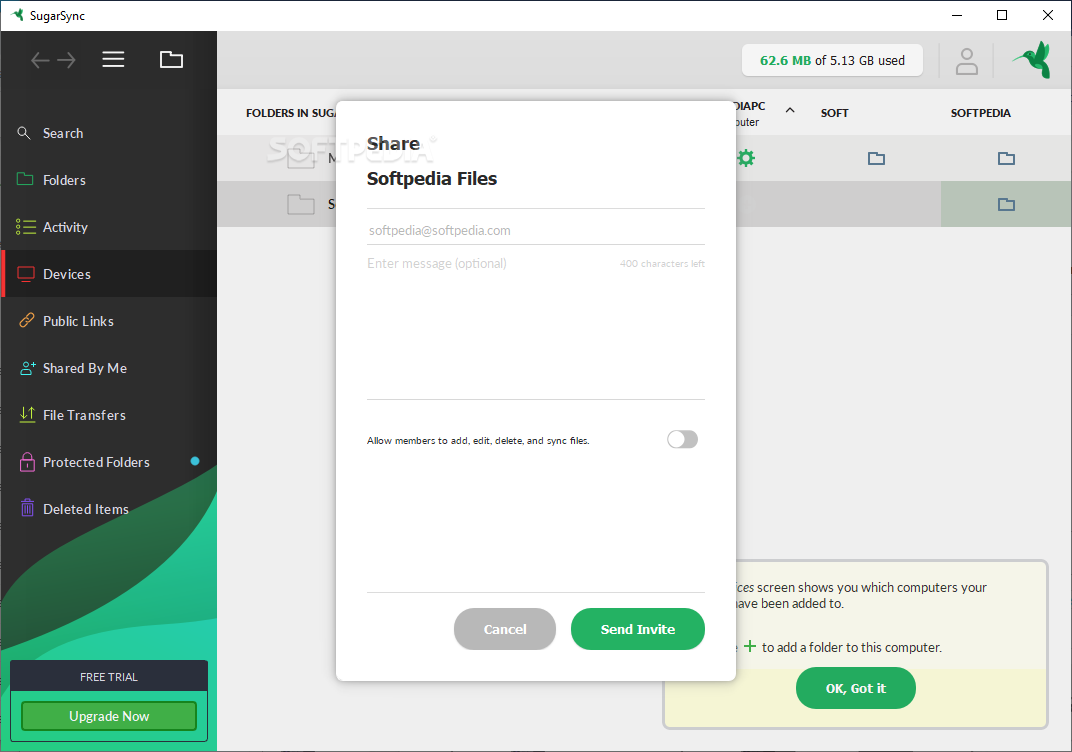
From the 'Sharing' section of SugarSync, you can view which items you made public to other people and the number of times that they were downloaded in total. Similarly, the 'Shared With Me' tab lets you list the folders that other users have allowed you to access. The 'Contacts' can be added so as to make it easier to share data.
SugarSync can demonstrate its usefulness when your work entails multiple machines, but you do not want to carry around USB sticks or other sorts of storage devices with you all the time. It enables you to keep all your relevant files in a single location, and to synchronize the data between them, to make sure you have access to the same items from any computer, without giving you a headache in the process.
SugarSync 4.1.3.2
add to watchlist add to download basket send us an update REPORT- runs on:
-
Windows 11
Windows 10 32/64 bit
Windows 8 32/64 bit - file size:
- 15.4 MB
- filename:
- SugarSyncSetup.exe
- main category:
- System
- developer:
- visit homepage
Microsoft Teams
4k Video Downloader

ShareX
7-Zip
Windows Sandbox Launcher
calibre

IrfanView

Zoom Client

Context Menu Manager
Bitdefender Antivirus Free

- Zoom Client
- Context Menu Manager
- Bitdefender Antivirus Free
- Microsoft Teams
- 4k Video Downloader
- ShareX
- 7-Zip
- Windows Sandbox Launcher
- calibre
- IrfanView